CUSTOMER INTERVIEW
We ask when the problem started, what makes it happen, what makes it stop, and whether another mechanic has already looked confused by it.
You do not need the correct technical terminology. Clicking, shaking, glowing, smelling weird, and "it only happens when nobody else is in the car" are all valid diagnostic starting points.
Automotive problems rarely arrive with a convenient label. They arrive as a thump after turning left, a blinking symbol nobody recognizes, a vibration at exactly 64 miles per hour, or a smell best described as financially concerning.
Our diagnostic process starts with what you notice, reproduces the condition whenever possible, and then converts your description into something that looks excellent on a repair order.
Every diagnostic visit follows a disciplined process designed to reduce uncertainty or, at minimum, organize it into a clean-looking service report.
We ask when the problem started, what makes it happen, what makes it stop, and whether another mechanic has already looked confused by it.
Technician performs a controlled road test while listening carefully for the exact noise the vehicle has now decided not to make.
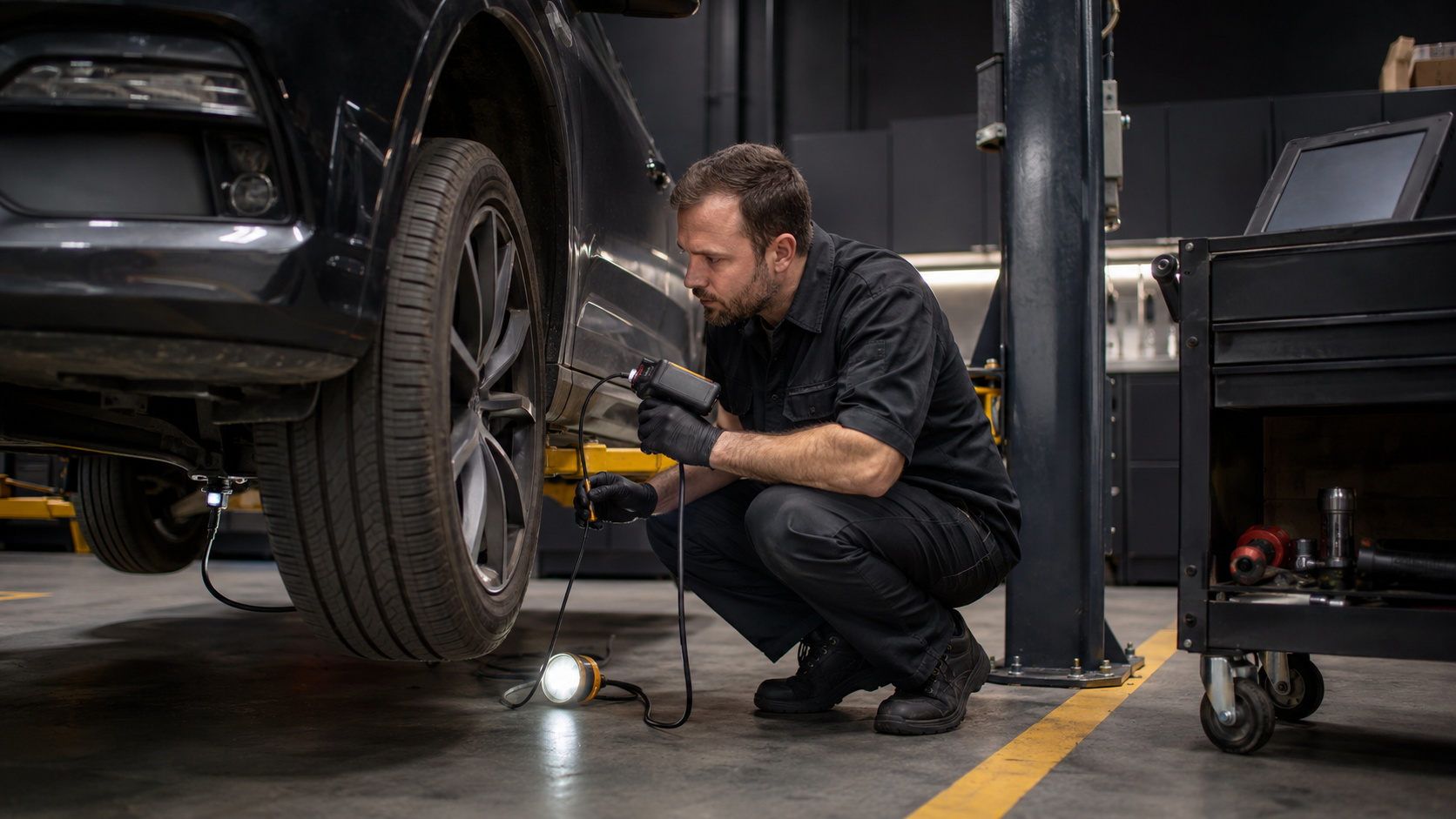
Diagnostic equipment, flashlights, mirrors, inspection tools, and highly meaningful facial expressions are deployed.
Findings are translated into ordinary language, repair priorities, and at least one sentence beginning with "what we're seeing here is..."
The industry's most detailed customer complaint. Fortunately, our technicians recognize dozens of noises and can confidently mispronounce several more.
Rapid clicking during lane changes may indicate low blinker fluid pressure, reduced signal lubrication, or a turn signal functioning exactly as designed.
Metallic exhaust-area rattles can result from worn rotational support components or whatever loose heat shield is actually making the noise.
Suspension system may be experiencing philosophical conflict with potholes, speed bumps, driveway entrances, or local infrastructure.
Modern dashboards contain dozens of symbols designed to communicate important information using pictures nobody remembers from the owner's manual.
The engine control system has detected something outside its preferred emotional or mechanical operating range.
One or more tires may contain insufficient, excessive, outdated, or seasonally inappropriate quantities of air.
Simultaneous warning illumination indicates either a meaningful electrical concern or a vehicle attempting to celebrate prematurely.
We categorize vibrations by speed, location, intensity, steering-wheel participation, and how quickly the customer says "there, did you feel that?"
Vehicle and roadway may have established a narrow speed range in which neither party is willing to compromise.
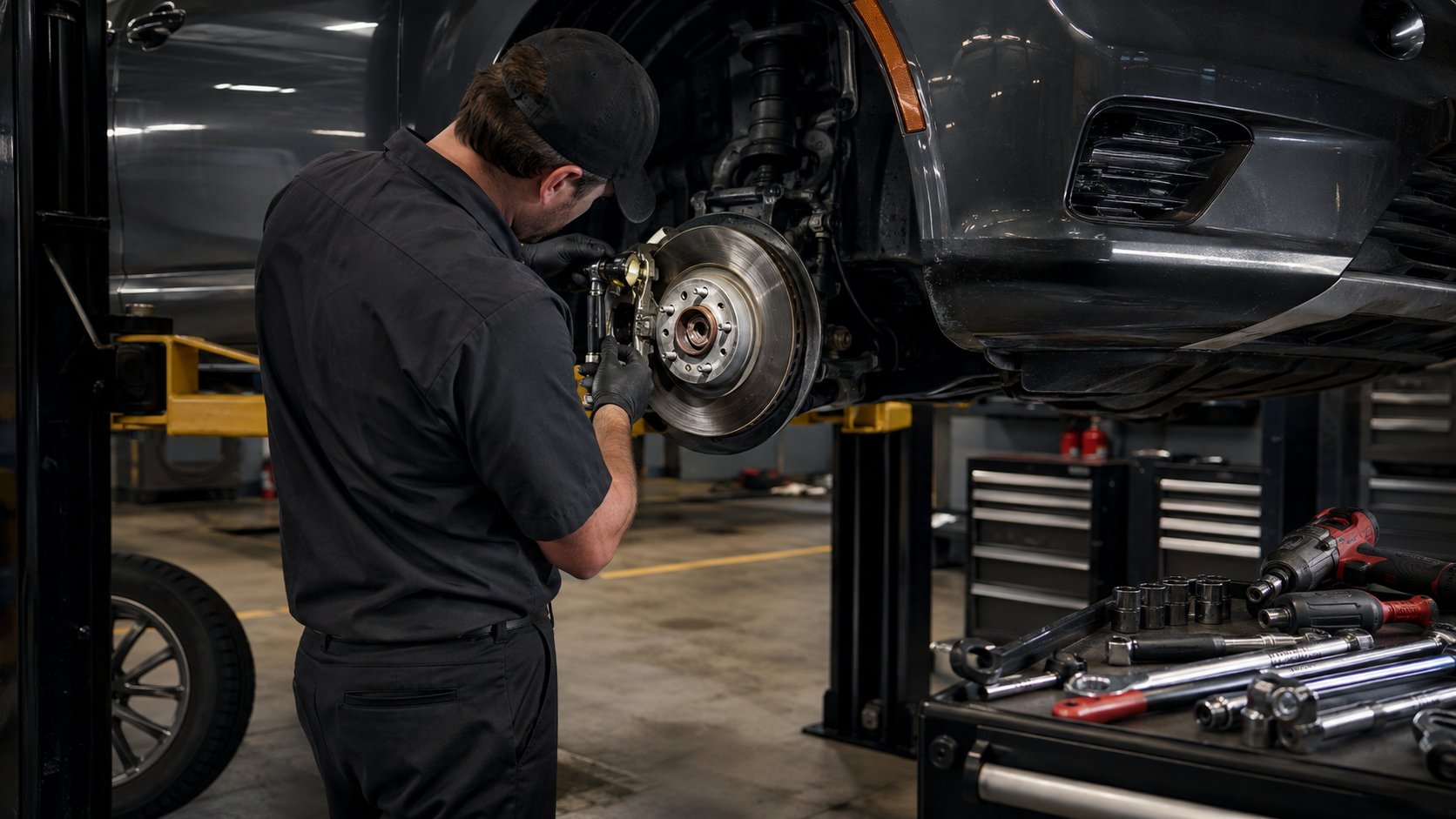
Uneven brake dust distribution may be causing rotational disagreement between front and rear wheel cleanliness levels.
Idle quality may indicate depleted spark reserves, mechanical concern, or an engine simply uncomfortable with sitting still.
Odor is technically diagnostic information. We classify smells by intensity, temperature, location, persistence, and immediate impact on customer optimism.
Something may be hotter than intended, contacting something it should not, or remembering a previous oil spill.
Sweet odors frequently justify an actual cooling-system inspection before anyone attempts to identify flavor.
Electrical odors receive immediate attention because wires are generally at their best when not actively developing a fragrance.
Intermittent starting complaints are evaluated using battery tests, ignition checks, repeated key turns, and comments such as "of course it started for me."
Electrical reserves may be insufficient to complete the vehicle's morning startup obligations.
Several systems may be completing their assigned tasks while the engine itself declines to join the project.
Vehicle may require additional encouragement, electrical replenishment, or an actual repair unrelated to motivational technique.
The most advanced automotive failure mode: a problem that disappears immediately when anyone qualified is available to witness it.
Vehicle has detected professional observation and temporarily suspended all unusual behavior until approximately five minutes after pickup.
System has elected to stop reporting the concern without necessarily resolving whatever inspired it in the first place.
Symptoms have temporarily vanished and the owner has begun reconsidering whether the entire event occurred.
Our diagnostic scanner communicates with supported vehicle systems to retrieve trouble codes, operating data, historical concerns, and enough numbers to make the service counter look extremely legitimate.
SCHEDULE DIAGNOSTICS
General mechanical concern detected somewhere between the front bumper and financial responsibility.
Directional fluid level below expected signaling threshold. Driver confidence may be affected.
Intermittent interior rattle previously detected. Current location remains strategically uncooperative.
Diagnostic pricing covers technician time spent recreating, testing, inspecting, scanning, listening, smelling, and occasionally staring at the vehicle in complete silence.
Best for obvious noises, single warning lights, straightforward symptoms, and concerns that remain present when the technician arrives.
For intermittent faults, mystery rattles, highway vibrations, multiple warning lights, and concerns requiring actual thought.
Reserved for issues nobody can reproduce, problems occurring only on Tuesdays, and vehicles previously diagnosed by several relatives.
Do not worry about sounding technical. The more accurately you describe what the vehicle does, when it happens, and what makes it stop, the better.
Sound effects are accepted at the service counter.
"It goes clunka-clunka-WHEEE when I turn left" contains more usable information than "car broken."