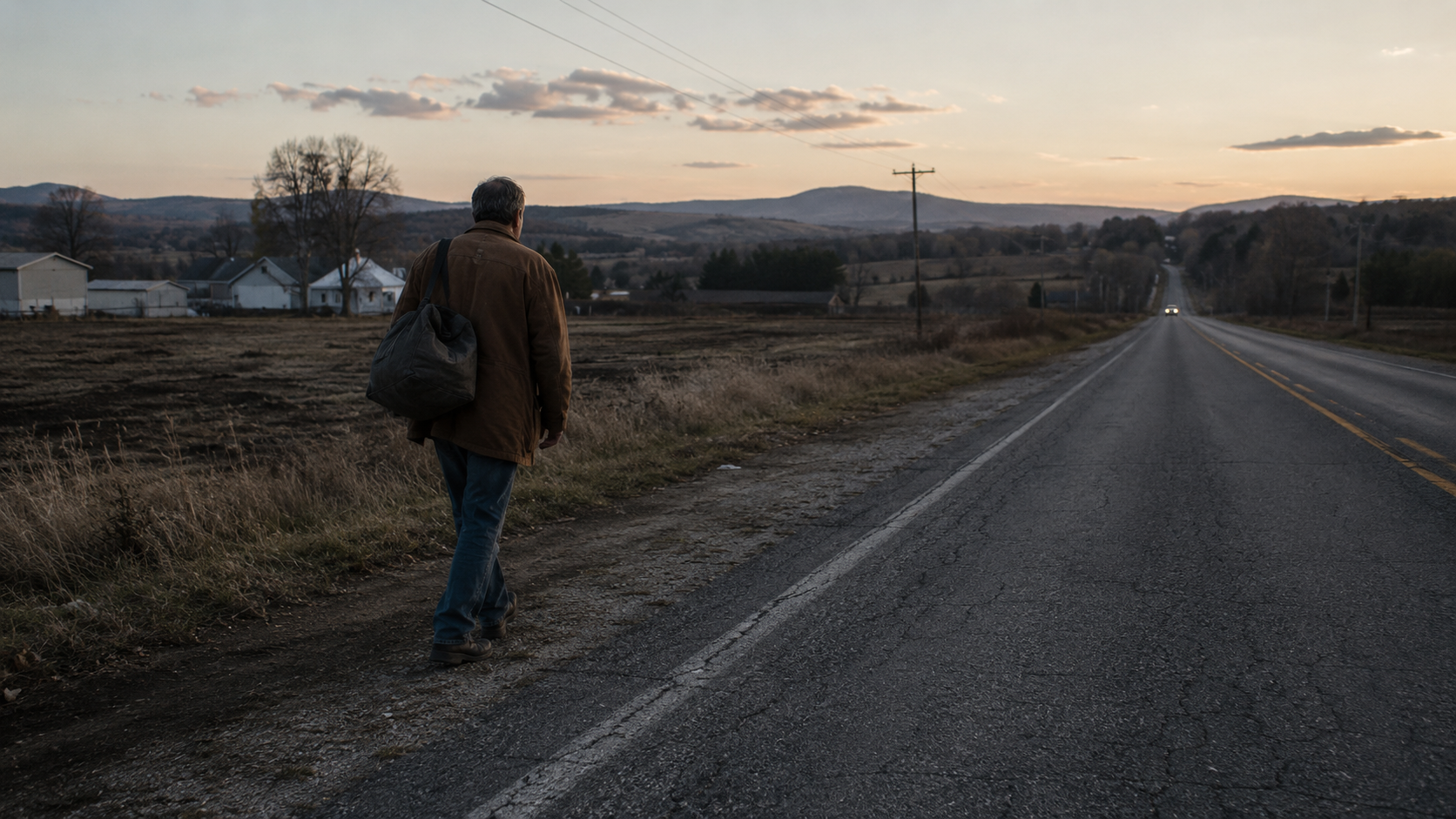
Wide frames and longer holds establish the scale of the road before the journey starts carrying emotional meaning of its own.
Project 03 / Full Case Study
Exterior / Rural Road / Last Light
Documentary / Short Film
THE LONG WAY HOME.
Sometimes the longer route is the whole point.
A quiet short documentary about distance, routine, memory, and the strange amount of story that can happen between where somebody is and where they are trying to get back to.
Natural light / one road / several unnecessary miles
Keep walking ↓
Section 02 / The Distance
No Shortcut / That Was Kind Of The Problem
The Premise
The Road Isn’t Background. It’s The Subject.
Getting home sounds simple until the getting becomes the story.
THE LONG WAY HOME follows one ordinary trip without trying to manufacture a larger event around it. Distance, repetition, weather, empty stretches of road, and the small rituals of moving forward become the structure of the film. The camera stays patient long enough for routine to stop looking ordinary.
Subject
One person / one route
Light
Available whenever possible
Camera
Observe before intervening
Rule
Do not invent drama the road already has
The working theory: stay with something long enough and eventually “nothing happening” starts becoming very specific.
Section 03 / Observation
Wait Long Enough / The Frame Starts Talking
Documentary Language
Watch First. Interpret Later.
The camera’s job here was not to arrive with answers. It stayed patient, let the road keep its scale, and allowed small behavior to matter. A pause, a glance, a stretch of empty shoulder, a few steps taken without urgency — that was the material.
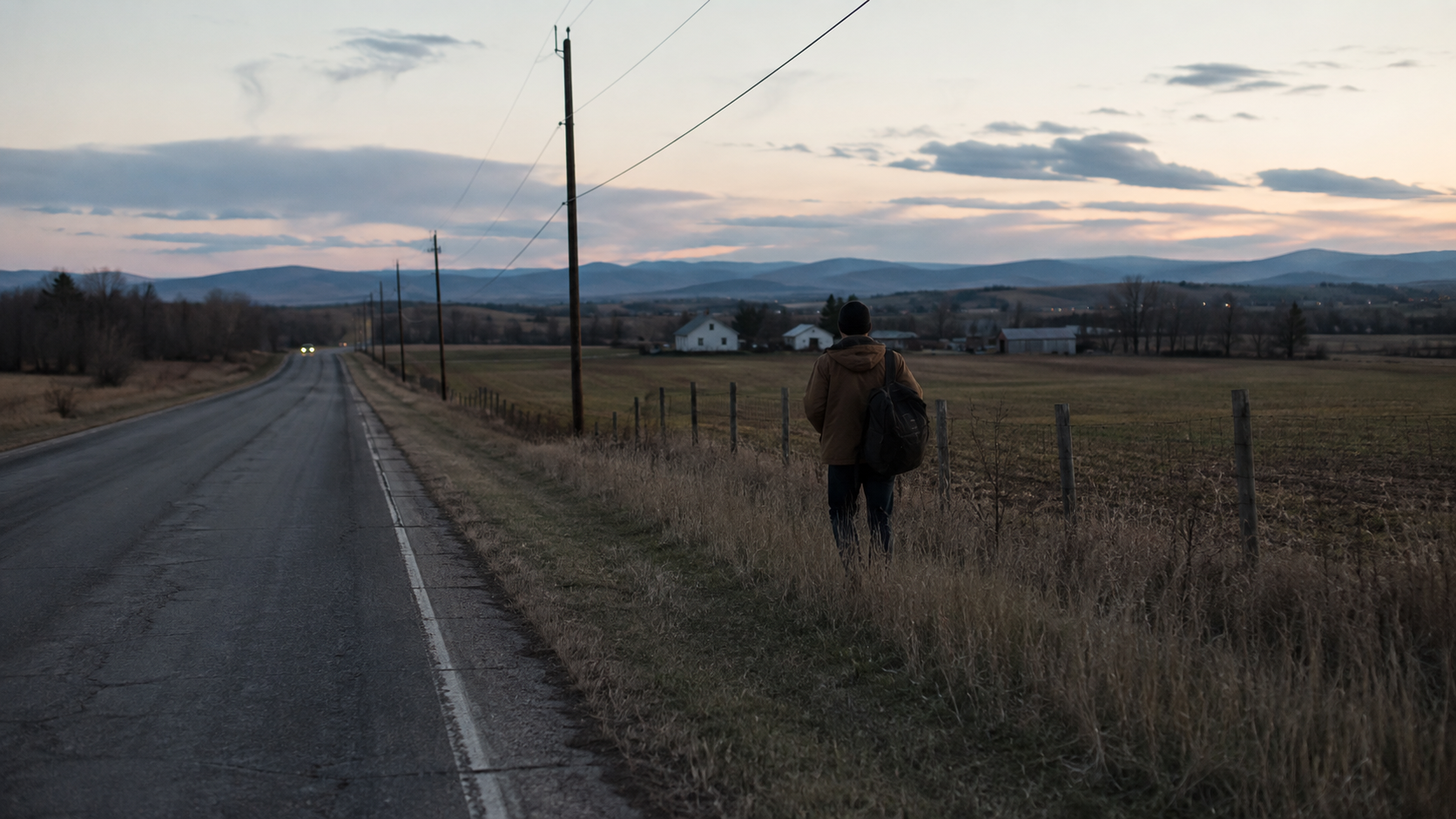
Observation meant resisting the urge to turn
every moment into a statement. The frame works
because the landscape, the subject, and the
distance between them are allowed to stay in
conversation.
Observational Frame
01 / Distance
Let The Landscape Speak
The subject stays human-sized inside the frame, which lets the road, fields, poles, and horizon hold narrative weight instead of becoming filler.
02 / Timing
Patience Before Action
Rather than chase constant movement, the camera waits through transitional moments long enough for ordinary behavior to become specific and emotionally legible.
03 / Light
Available, Not Announced
Dusk light carries the scene without shouting. The soft drop in contrast and color helps the film stay grounded, reflective, and unforced.
04 / Rule
Do Less. Notice More.
The guiding principle was simple: if the frame already felt honest, do not improve it into something less true. Cinema is very brave like that.
Section 04 / The Edit
Picture Lock / Nobody Asked It To Hurry
Editorial Rhythm
The Film Moves At The Speed Of The Walk.
The edit was built around duration rather than constant stimulation. Shots are allowed to finish their thought, transitions happen when the journey changes instead of when attention gets nervous, and silence remains in the cut long enough to become part of the geography. Nobody added a speed ramp. Everyone survived.
Editorial Pace / Picture Master
03:16
Picture
Holds
Atmos
Silence
Similar actions return with different light, terrain, sound, and fatigue. The rhythm evolves without pretending the route suddenly became an action sequence.
Arrival stays small. The film closes by letting the journey stop rather than announcing that everyone should now experience an emotion on schedule.
Section 05 / The Arrival
End Frame / Home Without Spectacle
Final Resolution
Home Doesn’t Need A Big Entrance.
The final movement of the film stays quiet on purpose. Arrival is not treated like a prize reveal or a dramatic reunion scene. The journey resolves because the person reaches a familiar place, the light is still fading, and the house is simply there waiting to be part of the frame. After all that distance, the ending barely raises its voice.
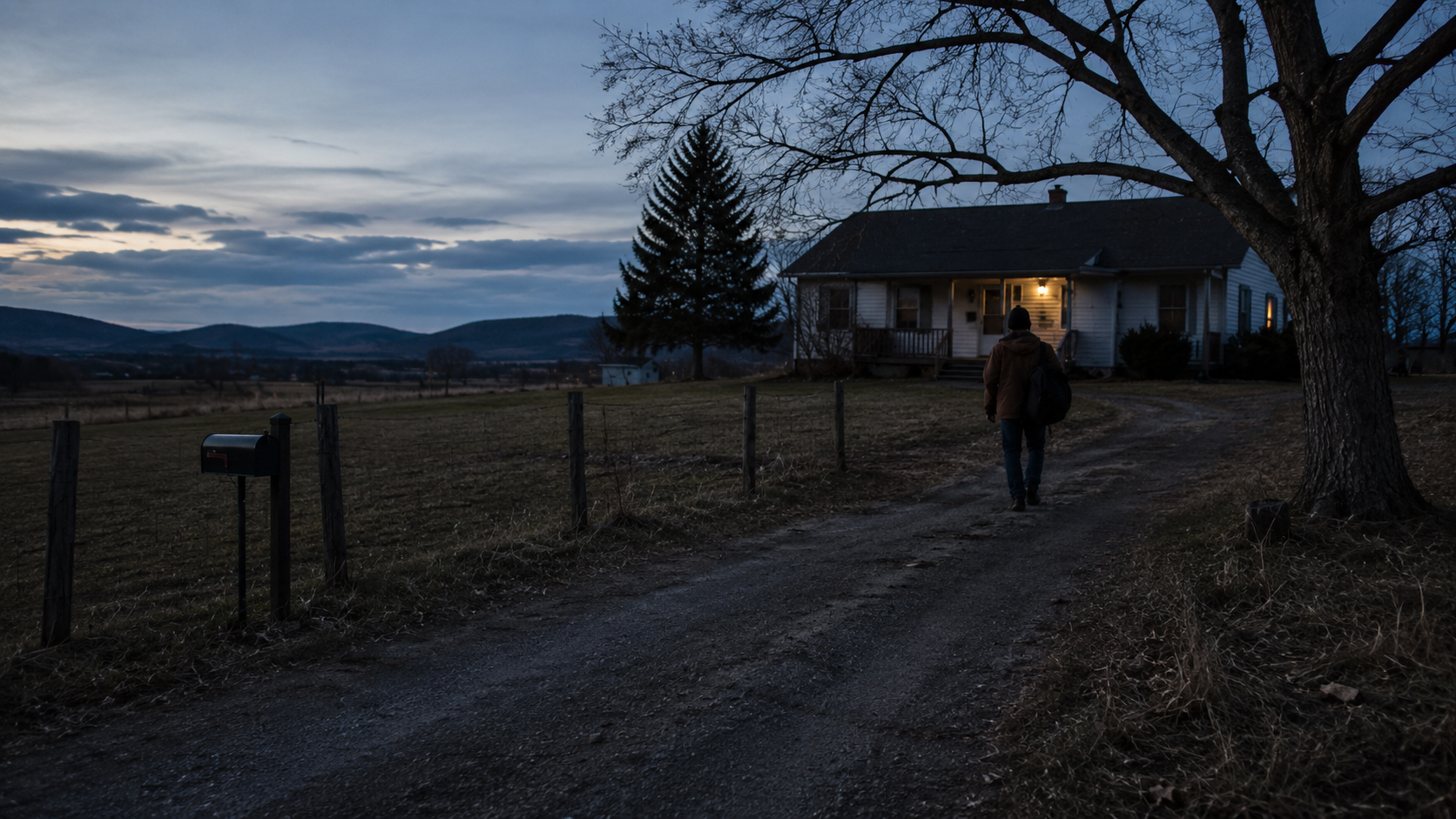
The closing image keeps the traveler small and the
home ordinary. The emotion comes from recognition,
not choreography: a porch light, a familiar yard,
and the sense that the road has finally run out of
reasons to continue.
Closing Frame
01 / Scale
Keep The Person Small
The frame resists turning arrival into a giant event. The traveler stays part of the environment, which lets the house and yard share the emotional weight.
02 / Light
Warmth, Not Drama
The cool dusk exterior and one or two practical interior lights say enough. Nothing glows like a movie ending that already bought its own soundtrack.
03 / Restraint
No Grand Reunion
The film refuses an oversized payoff. No waving crowd. No orchestral declaration. Just the last few steps and the comfort of being near the end.
04 / Outcome
Let Home Be Ordinary
That ordinariness is the point. The destination matters because it is familiar, lived-in, and real enough that the audience can supply the rest.
Project 03 / The Long Way Home / Complete
End Of Route
Final Project / Route Complete
That’s The Road.
Three projects down. Several exports survived.
THE LONG WAY HOME closes the current project reel. From here, head back to Selected Work to revisit the full slate, or start a project if your own footage has recently developed opinions.
Return To Selected Work
End Project 03 / End Current Reel
Back To Work →