Arrive
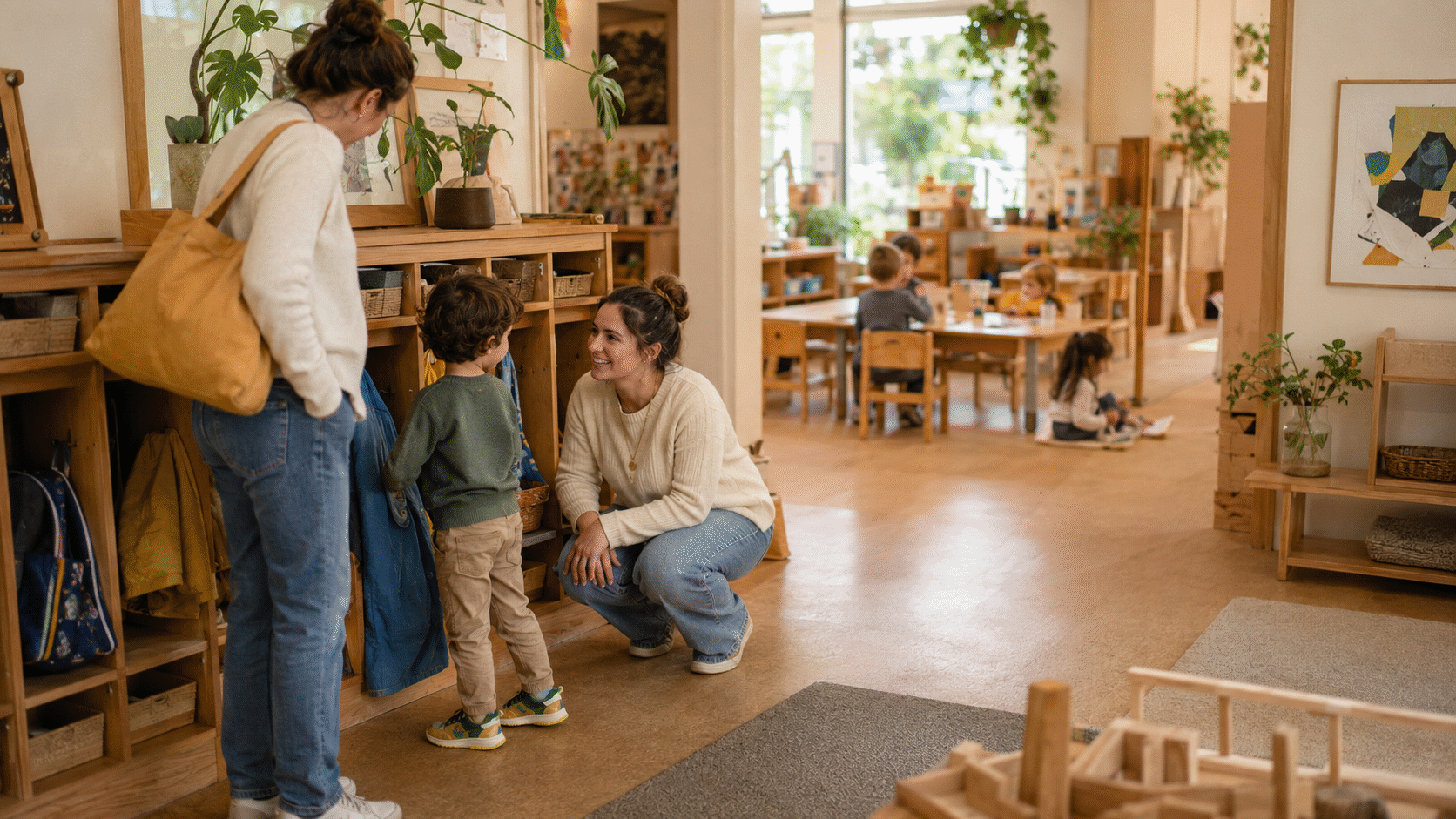
Jackets off. Bags away. Important updates exchanged. One parent realizes the water bottle is still in the car.
A Day Here
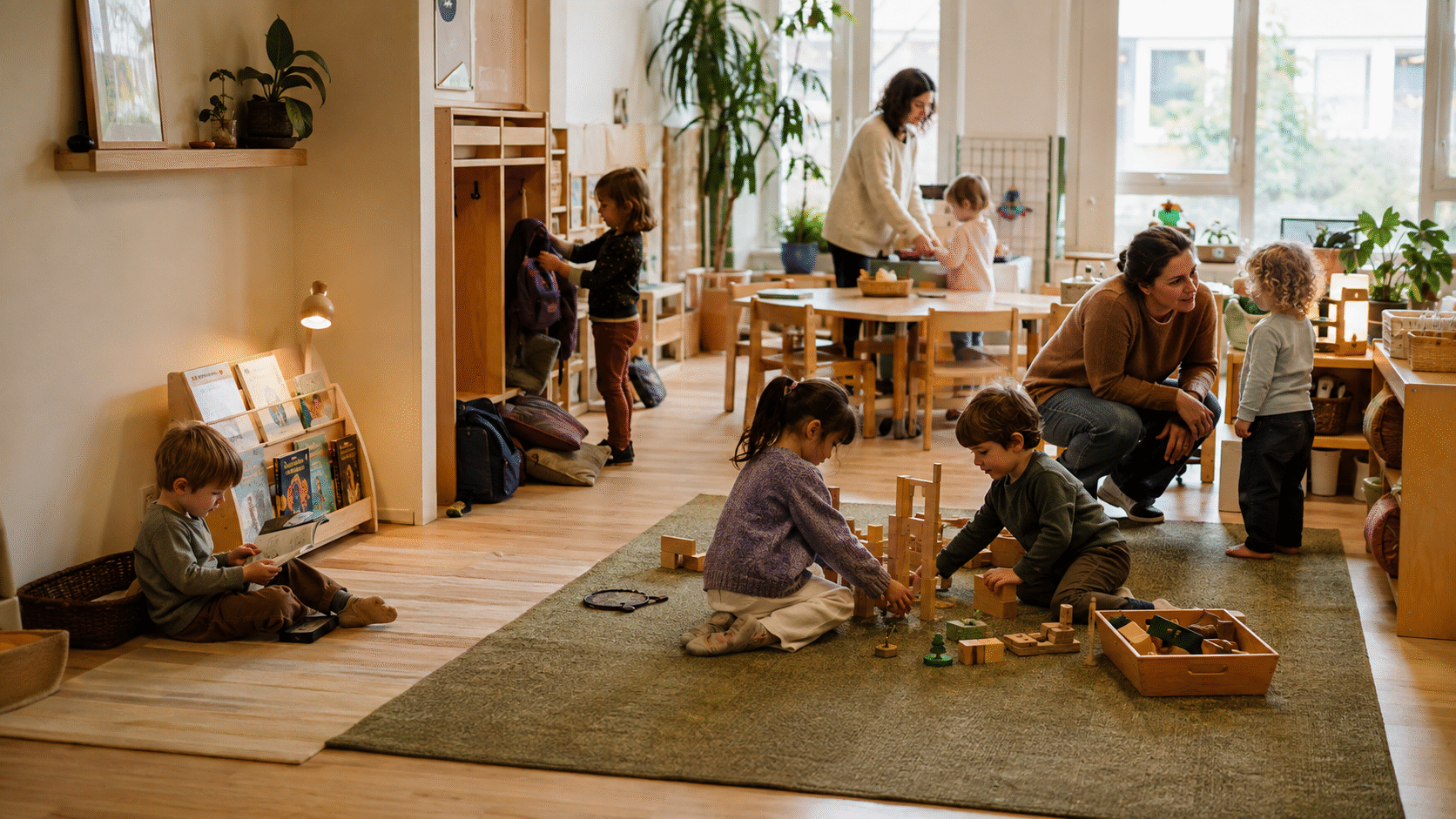
Predictable routines give children something solid to lean on while leaving enough room for play, projects, friendships, movement, stories, meals, rest, discoveries, and at least one thing nobody remembers putting there.
A Useful Disclaimer
Children benefit from knowing what usually comes next. Arrival feels familiar. Meals happen at expected times. Rest has a rhythm. Pickup eventually occurs.
But real childcare days also respond to weather, children's interests, classroom energy, special projects, developmental needs, and the sudden discovery of a very interesting bug.
The Daily Situation
Exact schedules vary by age group and center, but a thoughtful childcare day usually moves between connection, play, food, movement, learning, rest, and the occasional emergency involving somebody else's chair.
Jackets off. Bags away. Important updates exchanged. One parent realizes the water bottle is still in the car.
Familiar materials, friends, books, building, pretend play, conversations, and figuring out what everybody is doing.
Stories, songs, conversation, plans, questions, greetings, and approximately six unrelated announcements.
Art, blocks, sensory materials, pretend play, early literacy, numbers, science, projects, and highly specialized cardboard engineering.
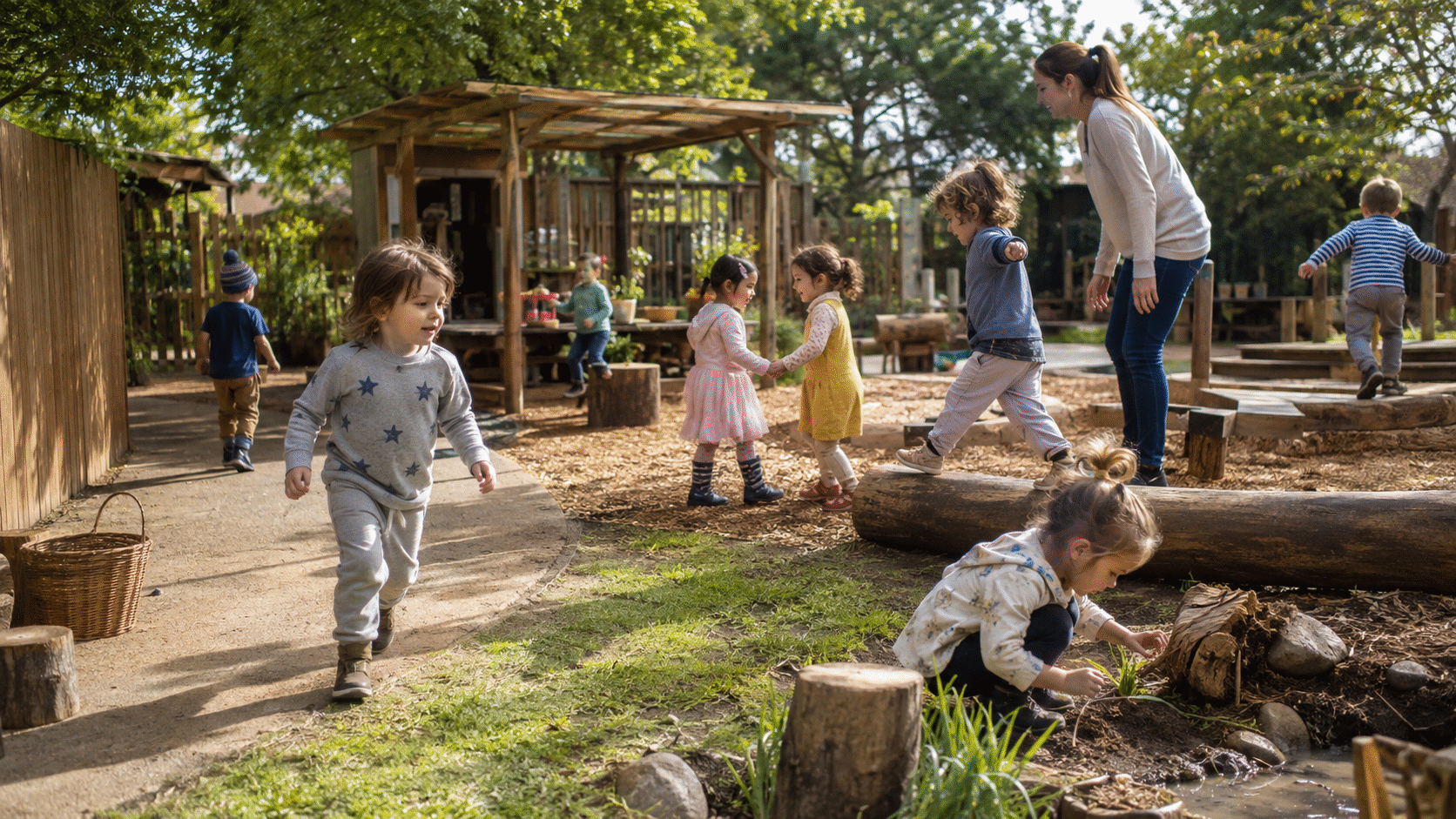
Run, climb, dig, balance, observe, invent games, investigate weather, and deploy available energy.
Wash hands, sit together, practice independence, talk about important things, and carefully monitor cracker distribution.
Rest, nap, books, quiet activities, lower lights, softer voices, and the daily search for whichever blanket has become temporarily unavailable.
Snack, movement, projects, outdoor time, centers, stories, and renewed confidence in everyone's ability to make noise.
Reunions, updates, missing belongings, masterpieces, important information, and absolutely no memory of what happened all day.
First Things First
Consistent arrival routines help children transition from home into the classroom. Educators can greet families, hear useful updates, help children settle in, and support the complicated emotional process of deciding whether goodbye requires one hug or fourteen.
Most of the Job Description
Long stretches of meaningful play give children opportunities to make choices, solve problems, practice language, move their bodies, collaborate, imagine, create, test ideas, repeat things, and become very invested in projects adults did not realize had a governing body.
Meals + Snacks
Mealtimes can support independence, conversation, self-help skills, social routines, trying foods, handwashing, cleanup, and learning that the person beside you is still entitled to their cracker.
Menus, food-service practices, allergy procedures, meal schedules, and family responsibilities should always reflect the real center's policies.
Energy Management
Outdoor time gives children room for running, climbing, balancing, digging, observing nature, taking safe risks, coordinating large movements, inventing games, and using voices that would be considered ambitious indoors.
The Quiet-ish Part
Depending on age, schedules, licensing requirements, and individual needs, children may nap, rest quietly, look at books, or participate in calm activities while the classroom shifts into a lower gear.
Nobody can legally guarantee sleep. Many have tried emotionally.
End-of-Day Investigation
Families should receive meaningful information about the day: meals, rest, routines, learning, outdoor time, projects, social moments, concerns, accomplishments, and anything else worth knowing.*
“Nothing.”
Template note: Times, routines, meals, rest periods, outdoor schedules, learning activities, supervision, communication practices, arrival/departure procedures, and all other daily operational details shown here are demonstration content. Replace them with the real center's verified schedule and policies before launch.
See a Real Day
Tour the center, see the rooms in use, watch the daily rhythm, meet the educators, ask practical questions, and observe at least one person carrying something unexpectedly important.