Relationships
Children learn best when they feel known, safe, supported, and genuinely connected to the adults around them.
Our Center
Warm rooms, thoughtful routines, caring educators, places to move, places to make things, places to calm down, and approximately four hundred places a missing water bottle could be.

The General Idea
Children are already people with ideas, preferences, relationships, questions, feelings, humor, and a remarkable ability to notice when you hoped they were not paying attention.
A thoughtful childcare center should make room for all of that while giving children the safety, rhythm, support, challenge, and connection they need to grow.
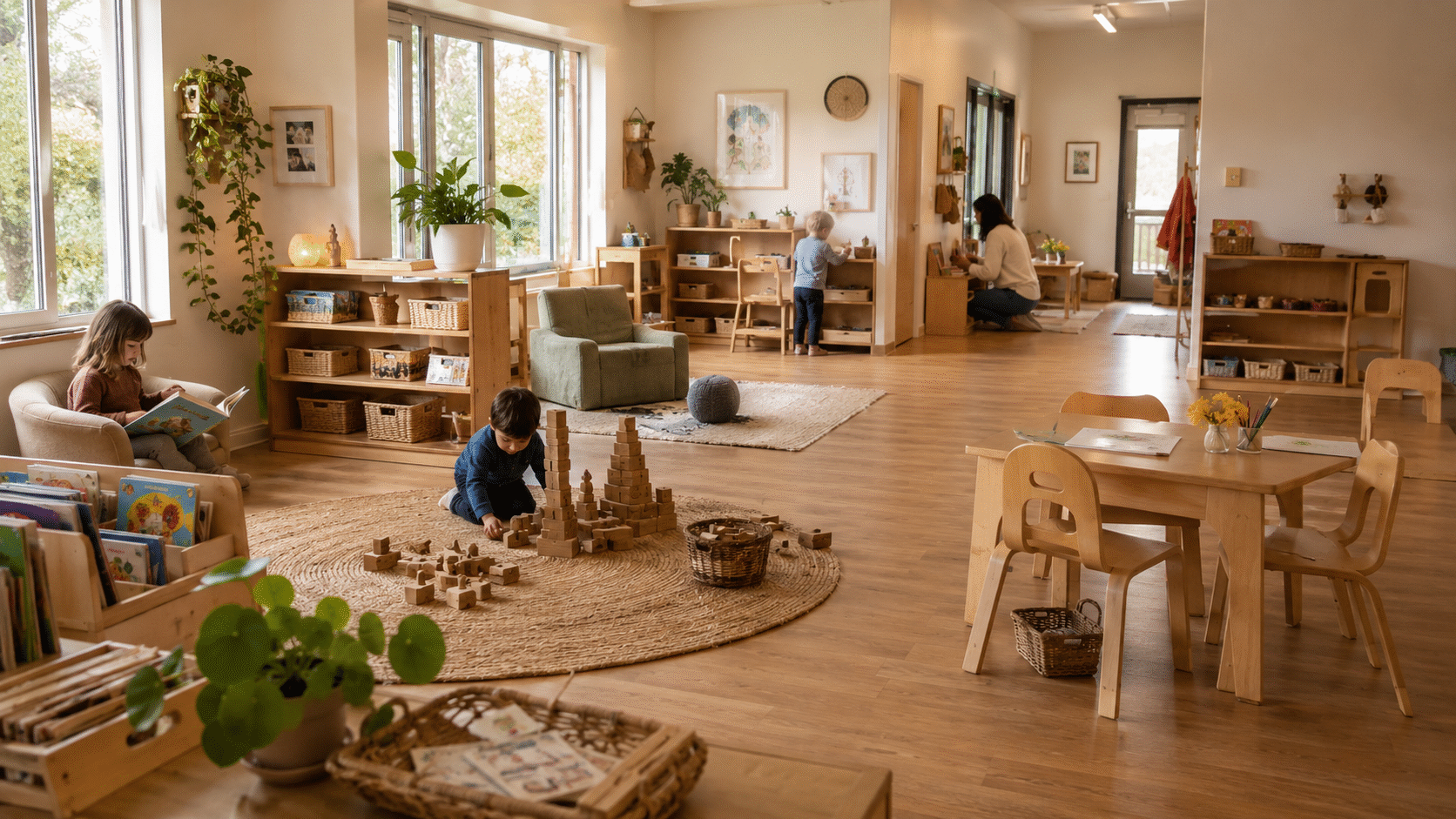
The Rooms Matter
Child-height furniture, accessible materials, comfortable reading spaces, room to build, room to move, room to create, and quieter places for children who temporarily require significantly fewer people.
Things We Take Seriously
Good childcare is built from hundreds of small decisions made consistently, thoughtfully, and preferably before somebody discovers the open container of washable paint.
Children learn best when they feel known, safe, supported, and genuinely connected to the adults around them.
Thoughtful supervision, secure routines, age-appropriate environments, careful procedures, and adults who are actually paying attention.
Children need time to explore, build, move, imagine, experiment, repeat, revise, and become deeply invested in cardboard infrastructure.
Families should know the useful things: routines, meals, rest, learning, milestones, concerns, victories, and today's mysterious sock situation.
Children deserve clear expectations, patient guidance, appropriate choices, predictable boundaries, and adults who remember they are still learning.
The Grown-Ups
Great early-childhood educators notice things. They learn children's rhythms, recognize emerging interests, support friendships, help with hard moments, prepare thoughtful environments, communicate with families, and somehow remember whose purple cup this is.
Staffing qualifications, screening, training requirements, ratios, certifications, and professional-development expectations should always be updated here to match the real center.

Behind the Cute Stuff
The parts parents do not see in the photos matter just as much: arrival and departure procedures, supervision, sanitation, emergency planning, medication policies, food handling, allergy procedures, staff training, documentation, and secure access.
Families Are Part of This
Families should have clear ways to communicate with the center, understand routines and policies, receive meaningful updates, ask questions, share concerns, and know when something important happened.
Children may still answer every pickup question with “nothing,” but the adults should have considerably more information.
Template note: Facility features, staffing, ratios, training, certifications, security, sanitation, emergency procedures, food service, allergy protocols, health policies, communication systems, and all other operational details shown on this page are demonstration content. Replace them with the real center's verified information before launch.
Come Look Around
Walk through the rooms, meet the people, ask the practical questions, notice the little details, and determine whether the tiny chairs feel appropriately tiny.