Play
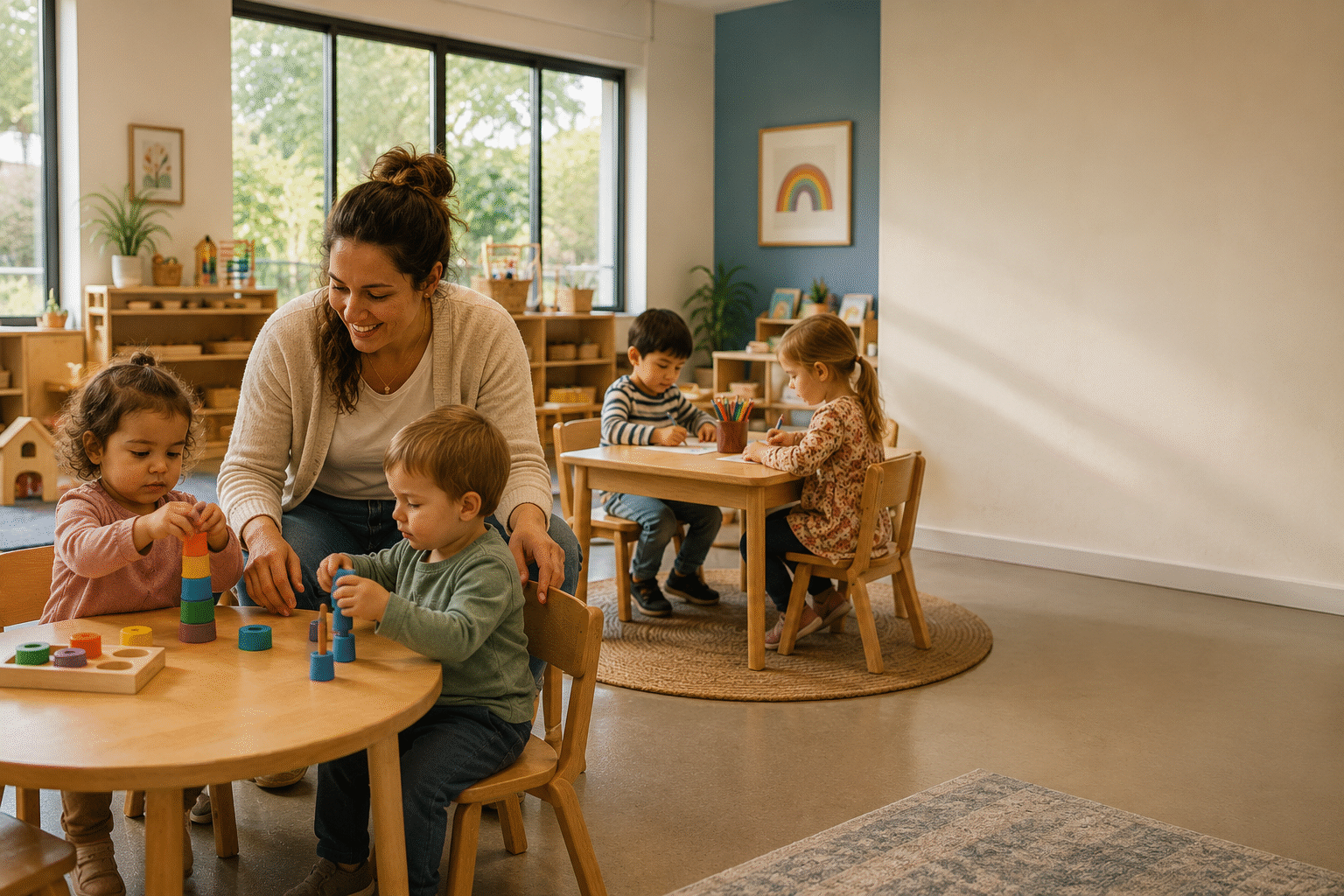
Time to explore, move, imagine, create, and make discoveries.
Programs
From first steps to kindergarten prep, each program is built around what children actually need at that stage — not what looks impressive in a brochure.
Where Do They Fit?
Every stage gets its own rhythm, environment, routines, and opportunities to learn through actual childhood.
* Demonstration age ranges. Replace with the center's actual program eligibility and enrollment requirements.
Infant Care
Infant care should feel calm, responsive, and personal — because babies have not yet agreed to follow anyone else's agenda.
The infant program can be customized around feeding, rest, floor play, sensory exploration, early movement, language exposure, and the individual routines families already use at home.

Some days the milestone is a new word. Some days everybody keeps their socks on.
Toddler Care
Toddlers are busy discovering that the world is enormous, fascinating, and apparently something they should climb.
This stage can focus on movement, language, independence, social routines, creative play, music, books, outdoor exploration, and plenty of opportunities to practice doing things themselves.
Preschool
Preschoolers learn by doing, asking, building, pretending, experimenting, and asking why approximately fourteen thousand times.
The preschool program can combine early literacy, numbers, art, music, storytelling, cooperative play, science exploration, outdoor activity, and practical routines that build confidence.
Serious Research
Building, drawing, sorting, pretending, asking questions, trying again, and discovering that glue sticks have caps for a reason.

Kindergarten prep, minus the tiny briefcases.
Pre-K
Pre-K helps children become comfortable with the routines, independence, communication, and curiosity they'll carry into their next classroom.
School readiness does not need to turn four-year-olds into tiny office workers. Learning can stay active, playful, social, creative, and appropriately challenging.
Across Every Age
Different classrooms need different routines. The basics of thoughtful childcare should remain pretty consistent.
Time to explore, move, imagine, create, and make discoveries.
Age-appropriate activities built around curiosity rather than worksheets.
Attentive routines and supportive relationships throughout the day.
Quiet time, naps, and age-appropriate opportunities to reset.
Fresh air, movement, and outdoor exploration when conditions allow.*
Parent communication based on the center's real procedures and tools.*
* Demonstration program language. Replace with the center's actual schedule, outdoor policies, communication process, curriculum, meals, staffing, and care practices.
Still Deciding?
Tour the center, see the classrooms, meet the team, and ask the questions that actually matter to your family.
Tiny shoes optional.