Independence
Managing belongings, following routines, making choices, cleaning up, and practicing increasingly heroic attempts at zippers.
Pre-K
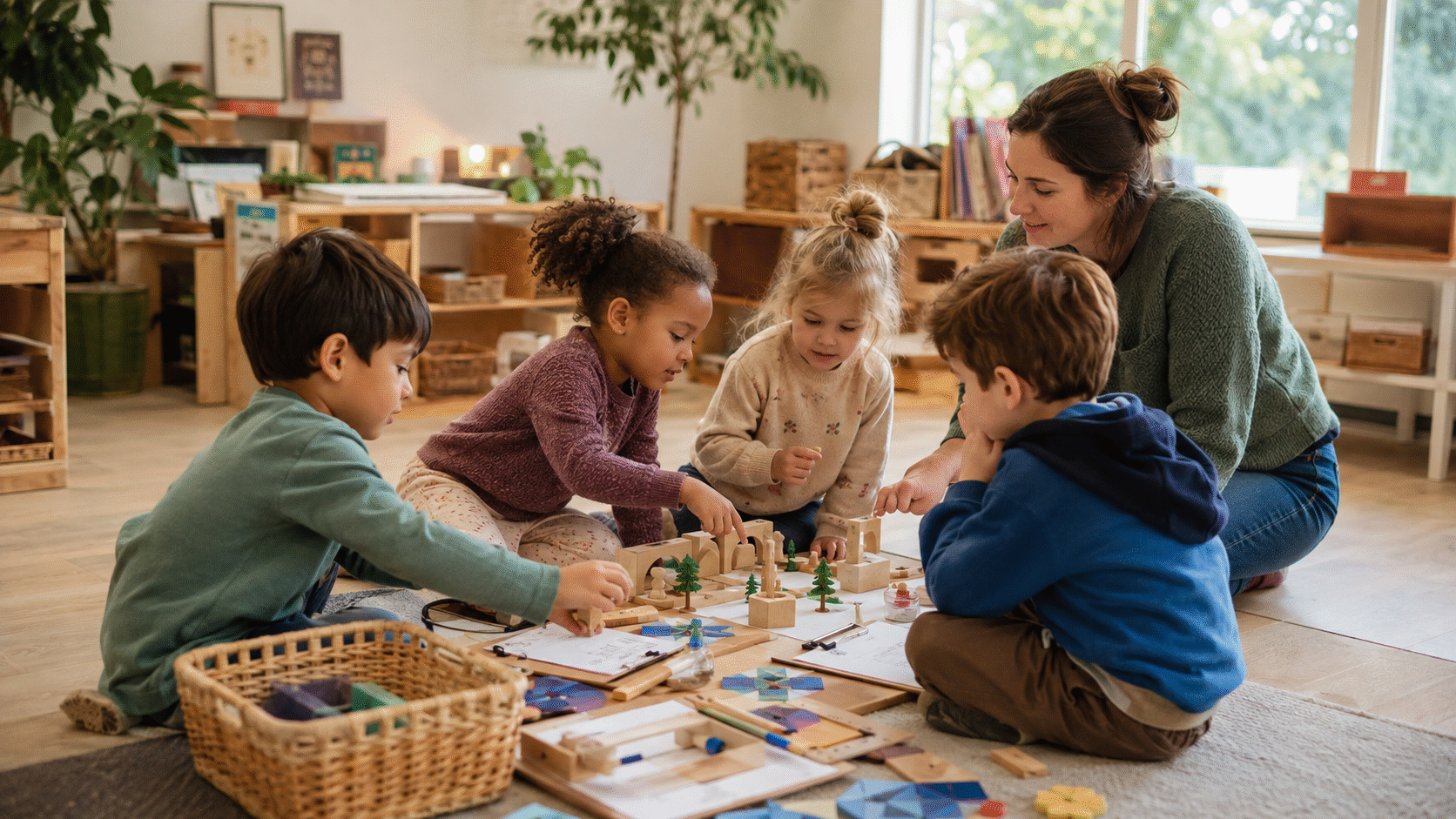
A big-kid program for tiny humans who are building confidence, independence, friendships, early academic skills, and increasingly detailed opinions about how things should be done.
Important Reminder
Pre-K can help children practice the routines, communication, problem solving, independence, and early learning skills that make the next classroom feel familiar.
It should not require a laptop bag, quarterly goals, or a tiny performance review.
Currently Loading
The goal is not perfection. The goal is a growing collection of “I think I can handle this” moments.
Managing belongings, following routines, making choices, cleaning up, and practicing increasingly heroic attempts at zippers.
Conversation, storytelling, listening, vocabulary, early literacy, and explaining exactly why somebody else started it.
Counting, patterns, sorting, comparing, measuring, shapes, quantities, and discovering that three crackers is absolutely not four.
Taking turns, sharing materials, working through disagreements, contributing ideas, and building things that immediately require rebuilding.
Asking questions, making predictions, testing ideas, trying again, and learning that “because I said so” is not technically a scientific method.
Learning Together
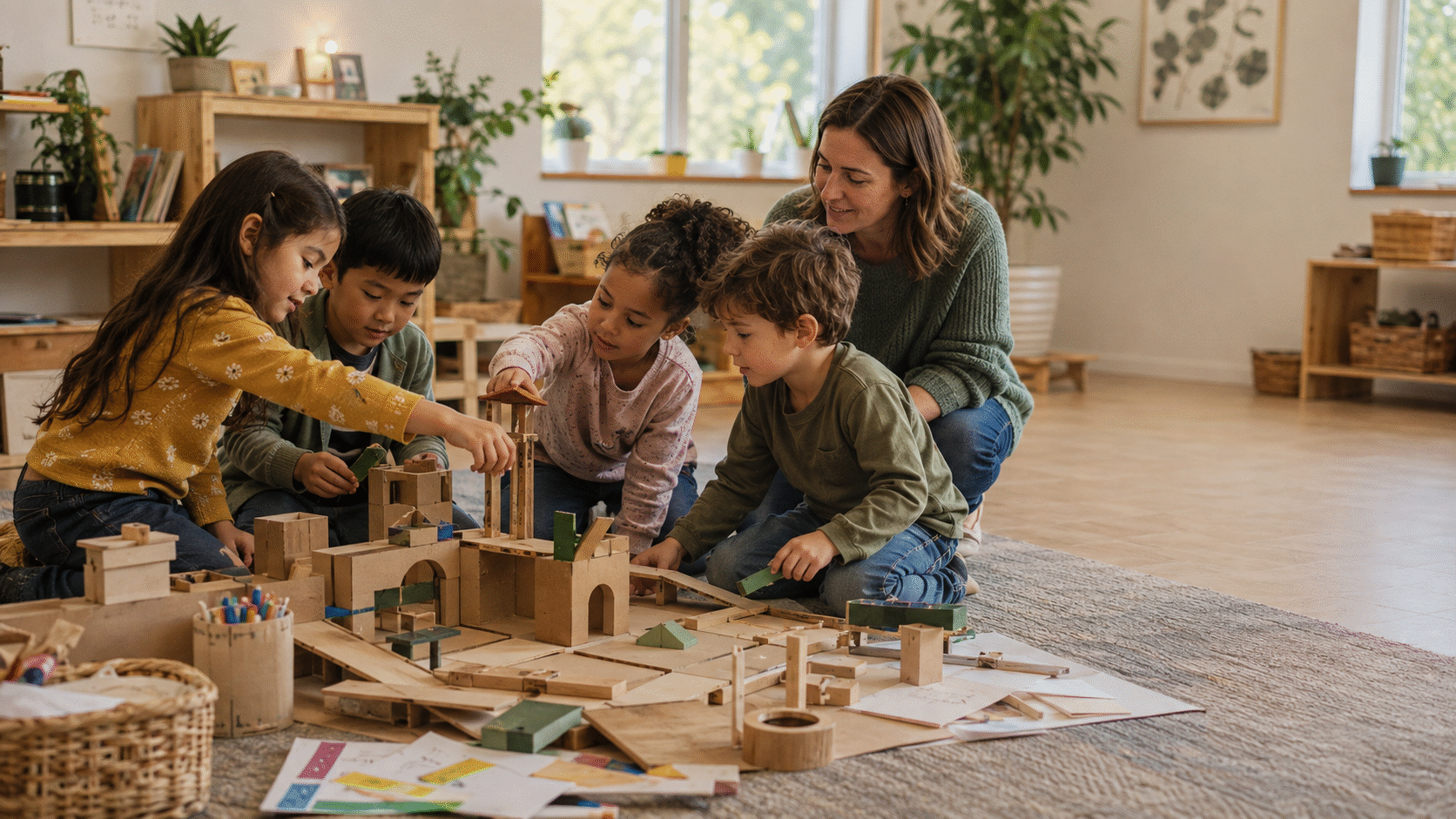
Collaborative projects give children room to plan, build, communicate, listen, experiment, solve problems, and discover that other people occasionally have ideas too.
Today's Schedule
Pre-K routines can combine predictable structure with long stretches of play, exploration, projects, movement, meals, outdoor time, and social learning.
Put things away, settle in, greet friends, begin investigating.
Stories, conversation, songs, plans, questions, and approximately twelve unrelated announcements.
Choice-based centers, building, pretend play, art, books, puzzles, science, and hands-on discovery.
Outdoor play, gross-motor activity, games, coordination, and necessary deployment of excess energy.
Projects, experiments, literacy, numbers, collaboration, and things involving a suspicious amount of glue.
Meals, quiet time, stories, reflection, and finding the water bottle.
Reveal approximately 14% of what happened.
Advanced Research
Children can practice early academic concepts through stories, games, conversations, projects, art, building, movement, experiments, and other activities that remain recognizable as childhood.
Growing Confidence
Pre-K gives children repeated chances to make choices, manage routines, care for belongings, contribute to the classroom, communicate needs, solve small problems, and ask for help when “I can do it” becomes “actually, maybe you do it.”
Meanwhile, at Pickup
Families should have meaningful information about learning, routines, projects, friendships, meals, rest, outdoor time, and the little moments that make up a Pre-K day.*
“Nothing.”
Template note: Age eligibility, school-readiness goals, curriculum, assessment practices, meals, rest schedules, outdoor procedures, parent communication, staffing, toileting, safety procedures, and other operational details shown here are demonstration content. Replace them with the real center's policies before launch.
See It in Action
Tour the classroom, meet the team, ask about school readiness, see the learning environment, and witness several people confidently explaining things they learned yesterday.