Movement
Walking, climbing, balancing, carrying, dancing, and developing coordination through active play.
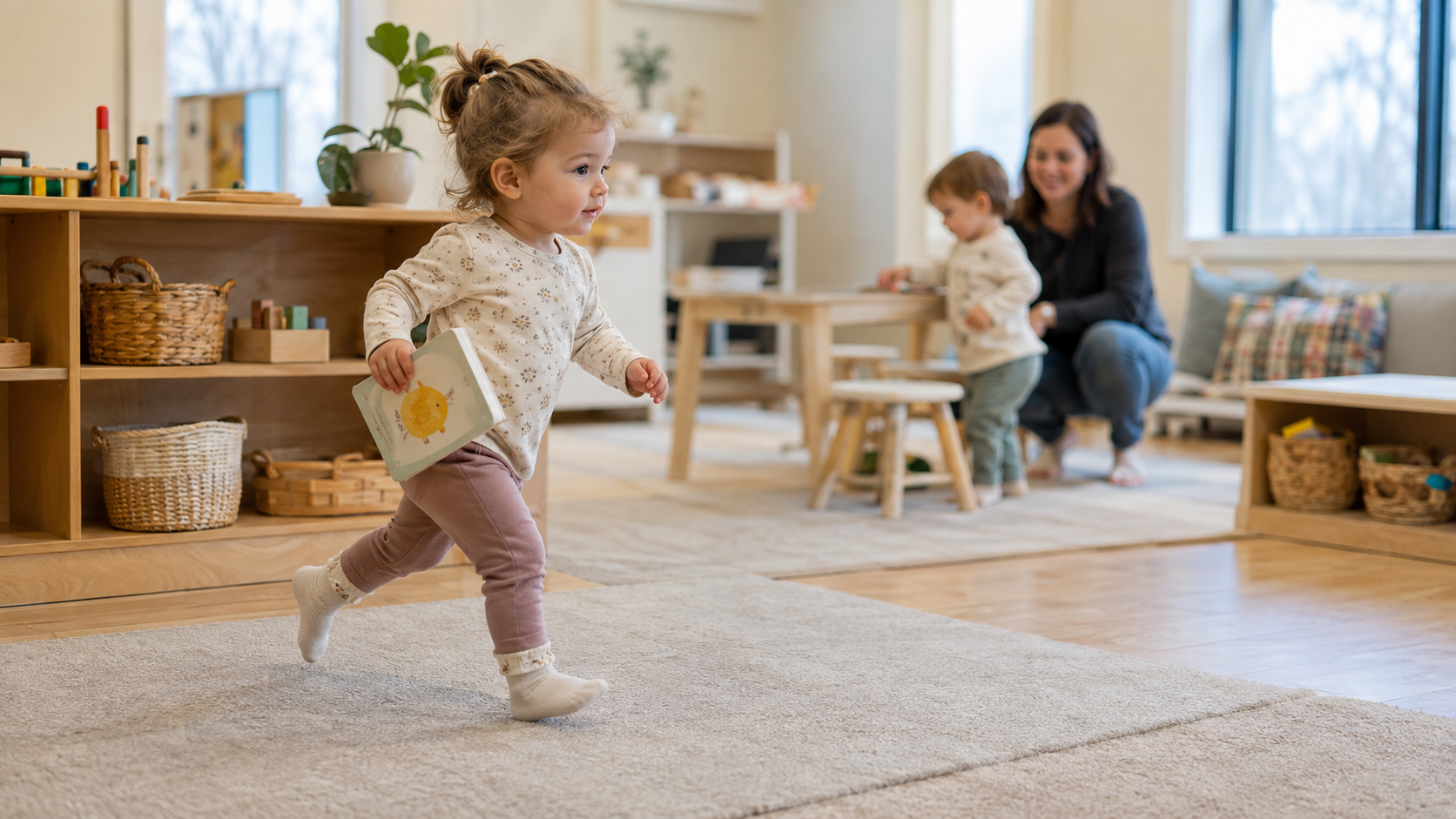
Toddler Care
A busy program for tiny humans who are walking, talking, climbing, exploring, testing boundaries, and suddenly very committed to doing everything themselves.
A Brief Statement
Toddlers are learning that they can move, choose, communicate, help, participate, and occasionally reject the exact cup they requested thirty seconds ago.
A thoughtful toddler program gives them safe opportunities to practice independence while keeping patient adults close enough to help.
Currently Under Development
Walking, climbing, balancing, carrying, dancing, and developing coordination through active play.
Conversation, songs, stories, naming objects, new words, and increasingly detailed negotiations.
Helping with routines, making simple choices, practicing self-help skills, and proudly doing things “MYSELF.”
Playing near others, beginning cooperative play, communicating needs, and discovering the highly controversial concept of sharing.
Touching, sorting, stacking, pouring, opening, closing, and finding out what happens next.
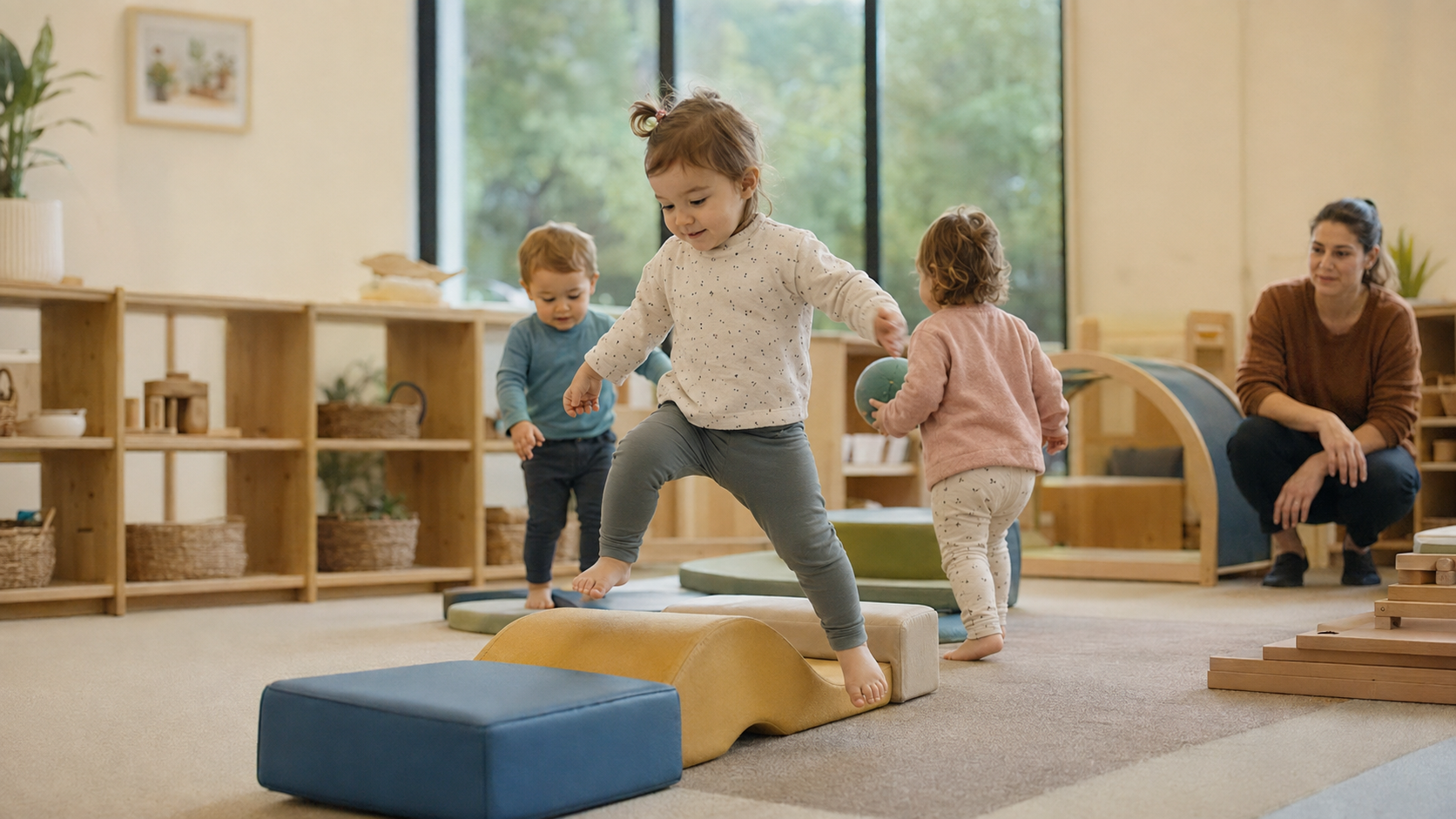
Built to Move
Indoor and outdoor movement can support coordination, confidence, body awareness, problem solving, and the important discovery that furniture has purposes other than climbing.*
Today's Agenda
Toddler routines can provide enough structure to feel predictable while leaving plenty of room for movement, exploration, play, meals, rest, and real-life toddler timing.
Settle in, reconnect, inspect the room for overnight changes.
Open exploration, movement, building, pretending, and making discoveries.
Tiny-human refueling according to the center's actual meal program.*
Stories, music, art, sensory activities, language, and hands-on learning.
Fresh air and active play when conditions and center policies allow.*
Quiet time based on the center's real toddler routine.*
Preferably with the same snack cup.
Hands-On Learning
Toddlers learn through real interaction: pouring, scooping, stacking, squishing, drawing, building, listening, moving, pretending, and repeating activities until something finally makes sense.
Words Everywhere
Talking throughout routines, reading together, singing, naming objects, listening, asking questions, and responding to children all help build communication.
The real center can customize this section around its actual language-development approach and curriculum.
Meanwhile, at Pickup
Families should know what happened during the day. This area can explain the center's real approach to activity updates, meals, rest, care routines, milestones, and communication with parents.*
“They had a great day.”
Template note: Age eligibility, meals, rest schedules, outdoor procedures, curriculum, developmental activities, parent communication, staffing, safety procedures, toileting practices, and other operational details shown here are demonstration content. Replace them with the real center's policies before launch.
See It in Action
See the classroom, meet the team, ask about toddler routines, and observe the operation while everyone is still technically wearing both shoes.