
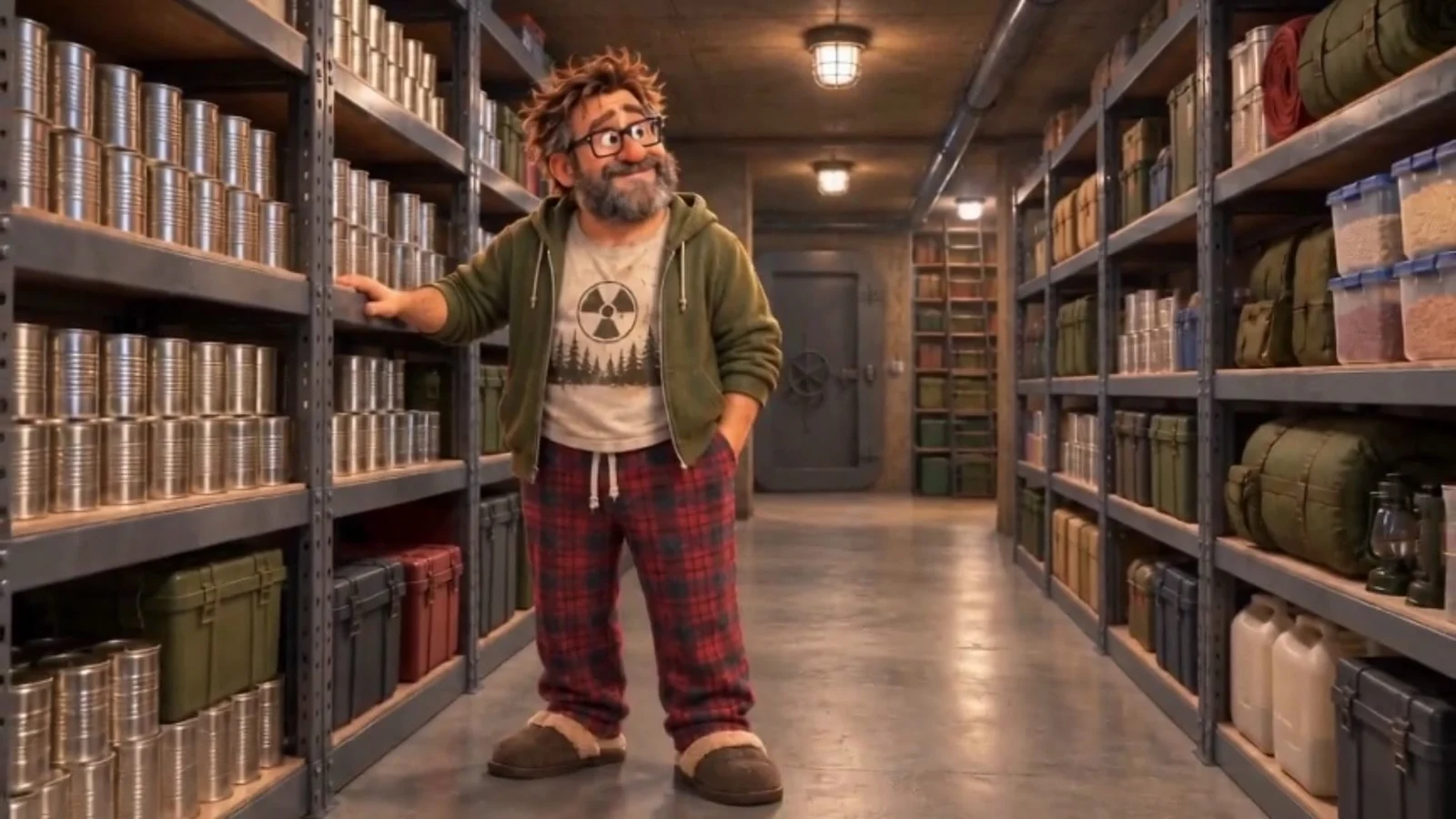
I promised I'd test it. So I gave ToonBee an actual production.
In my first investigation, I went looking for answers about a lifetime license, the difference between free AI models and paid credits, and the upgrade screen that made me question what I had purchased. I paid $67 for the software and $10.05 in tax, for a total of $77.05. The pricing confusion was real, but so was an important clarification: ToonBee has models labeled FREE whose allowances refresh, and optional advanced models can use credits. That's why I ended that article promising to stop staring at the checkout page and actually make something.
Support also offered me a complimentary permanent PRO upgrade after I explained my concerns. I accepted the opportunity to test it, not a waiver of my refund request. Mellissa from ToonBee confirmed in writing that the refund request would remain open while I evaluated the software and that the original 60-day guarantee still applied. I appreciated that. Good support should count in a review just as much as frustrating software does.
Then we did something admittedly unreasonable for a quick software trial: we opened an imaginary production studio, auditioned a tiny military dog, and made a sixty-second animated comedy into a real project. Well, approximately sixty seconds. As I eventually learned, the AI apparently had its own opinion about runtime, screenwriting, and who was allowed to speak.
Meet Gary, Linda, and a six-pound liability.
Our commercial was for Bad Influence, a premium gun-shop website template in our catalog. We weren't using AI to sell actual guns or invent product purchases. The storefront itself was the product: its visual design, responsive layout, organized categories, and inquiry experience.
The story was called The Apocalypse Has Terrible Timing. Gary Henderson, a prepper with fourteen years of emergency plans and an unconscionable number of beans, is convinced the zombie apocalypse has finally arrived. His wife Linda has the patience of someone who's been married to this man for a very long time. Sergeant Pickles, their Chihuahua, is head of bunker security by an appointment nobody else voted on.
Gary proudly tours his survival supplies, Linda asks about the ammunition he supposedly ordered, and a terrible fictional website leaves him stuck. Linda introduces him to the professionally designed Bad Influence storefront. After the logo and our slogan, we return to the bunker for a movie-trailer-style final joke: three thousand cans of beans, not one successful online order, and Gary whispering that the website still says it's processing. Linda's answer: "Gary. That was six months ago." We approved that ending before the first frame was ever generated.
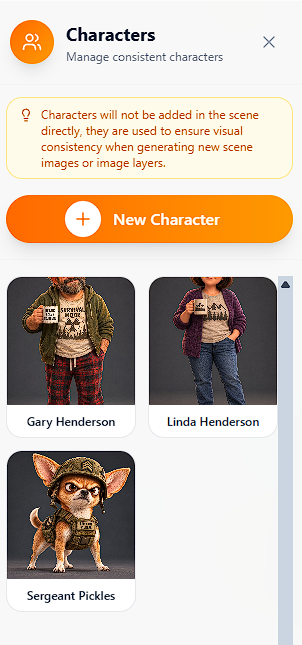
Here is the original high-resolution character artwork we prepared for our cast, so readers can see exactly what Gary, Linda, and Sergeant Pickles were supposed to look like. These are reference portraits, not frames from ToonBee's finished video. Click a portrait to inspect the full-size PNG.
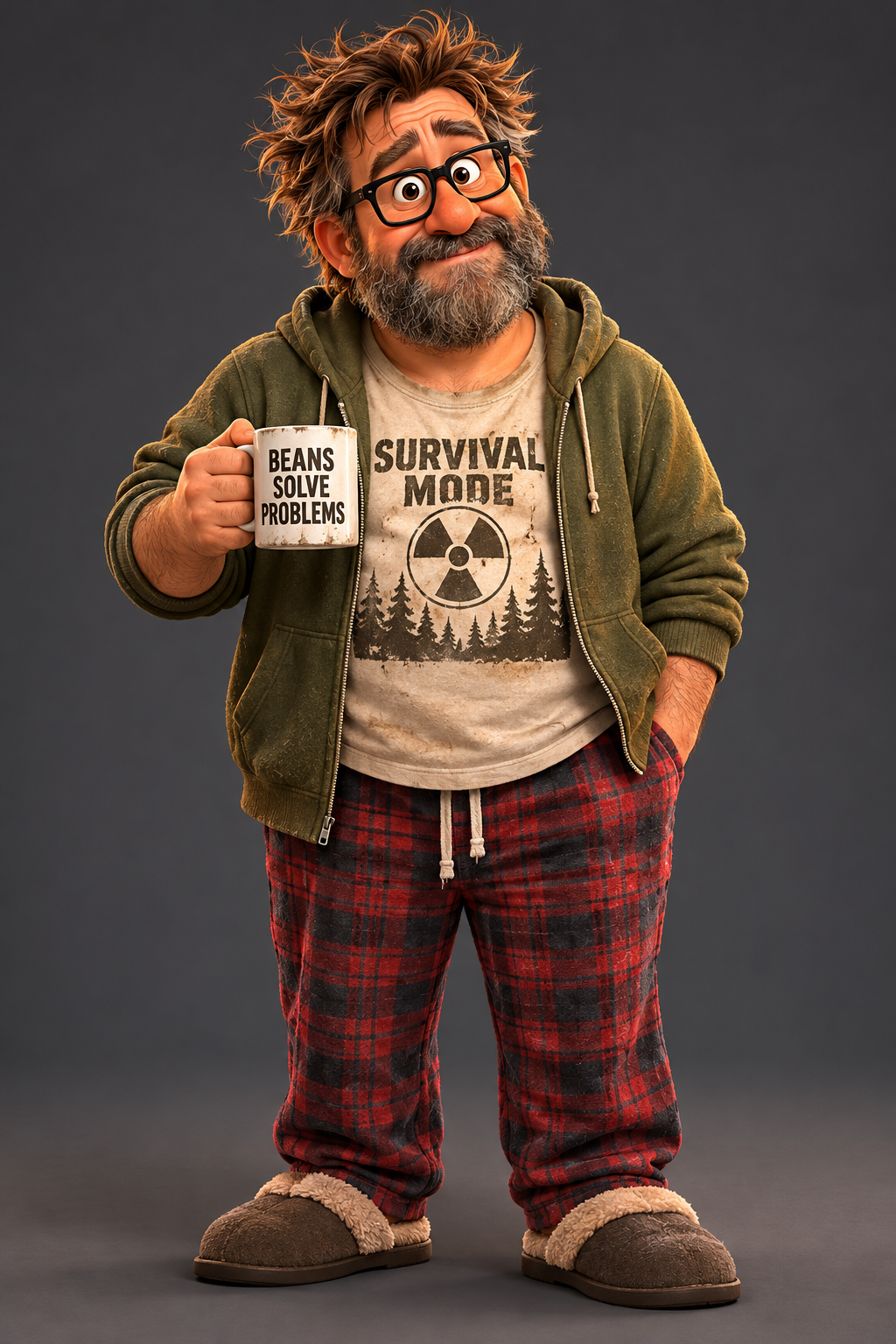
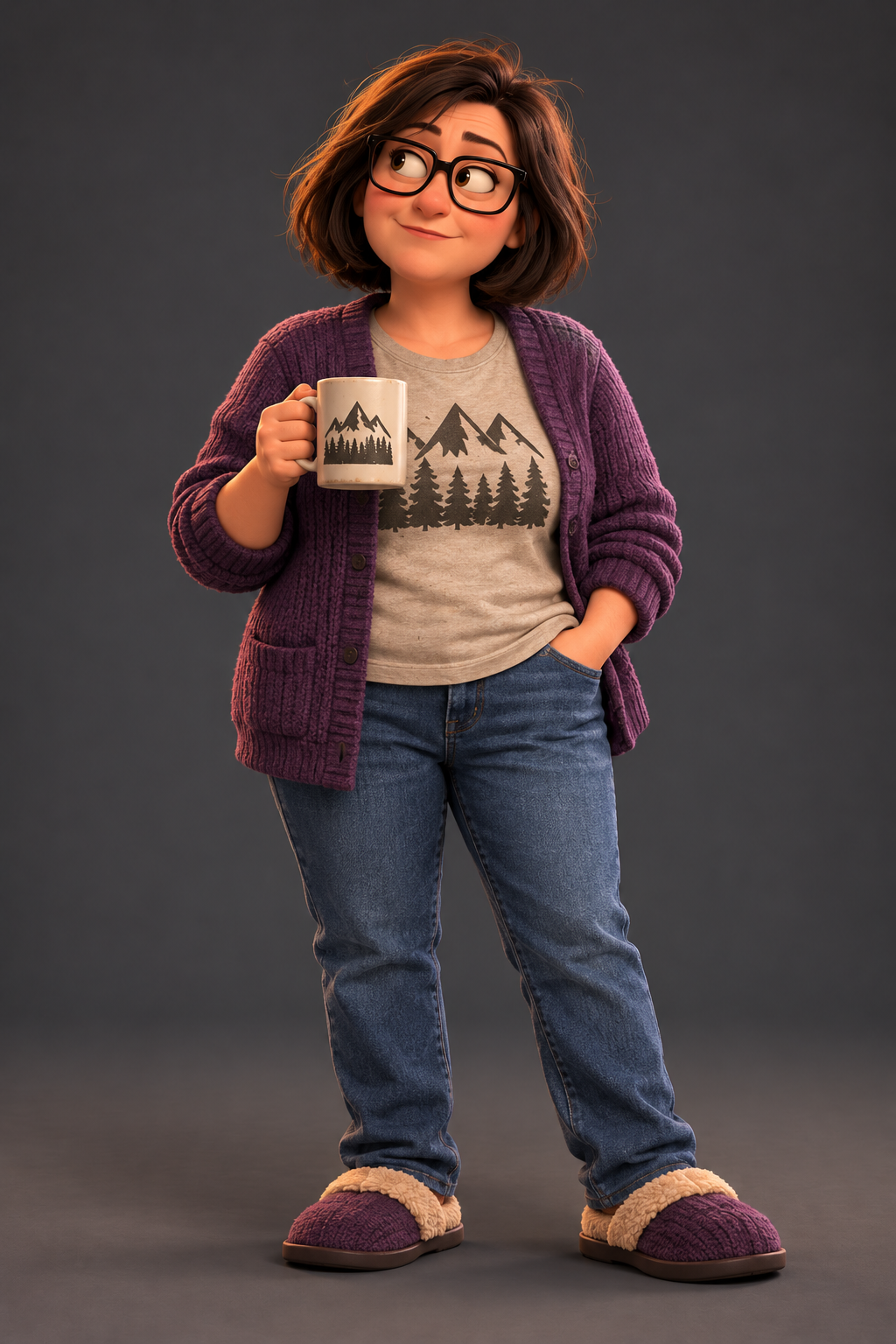
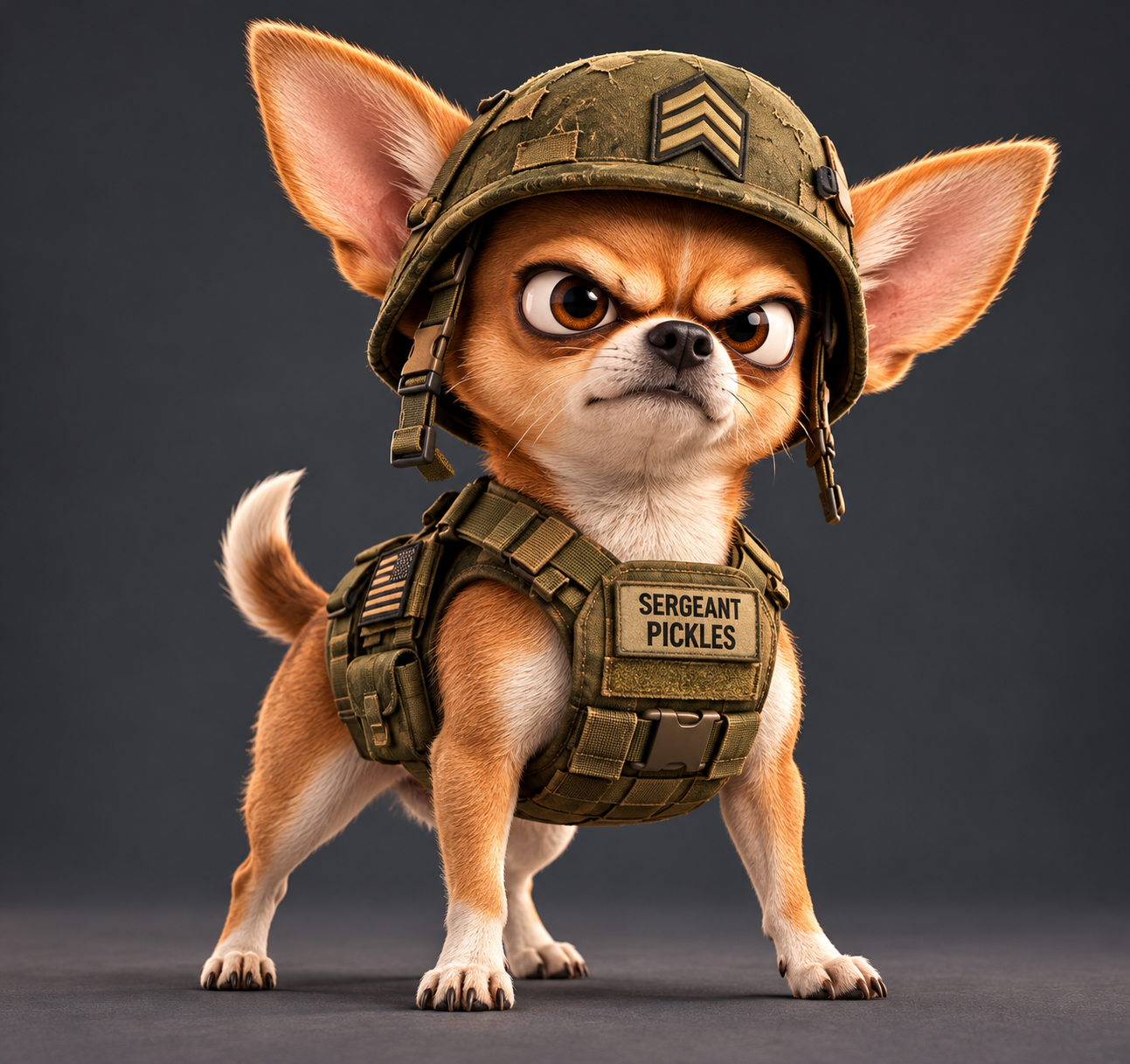
These portraits document the intended visual design; they do not, by themselves, establish which exact file was accepted for every generated shot. We separately documented character registration and the output of the completed tests.
Test one: Gary moved. His mouth had other plans.
We started in BeeStudio, the manual editor. I liked that we could register character references, generate a scene image, animate it with a free model, add voice, and export the result. The first still image was a beautiful bunker scene except for one small casting problem: Gary's head was cut off. Not the ideal debut for your leading actor, unless this was secretly a horror movie.
We corrected the framing and generated a much better shot. Then the video model labeled Seedance 1 PRO — Recommended FREE produced actual character movement. That worked. ToonBee deserves credit for it. The initial blocking was ridiculous, though: Gary jumped and pumped his arms like he'd won a halftime contest. Our script called for him to walk slowly down an aisle admiring his own stockpile. Once we rewrote the camera and movement instructions, the walk looked much closer to the intended scene.
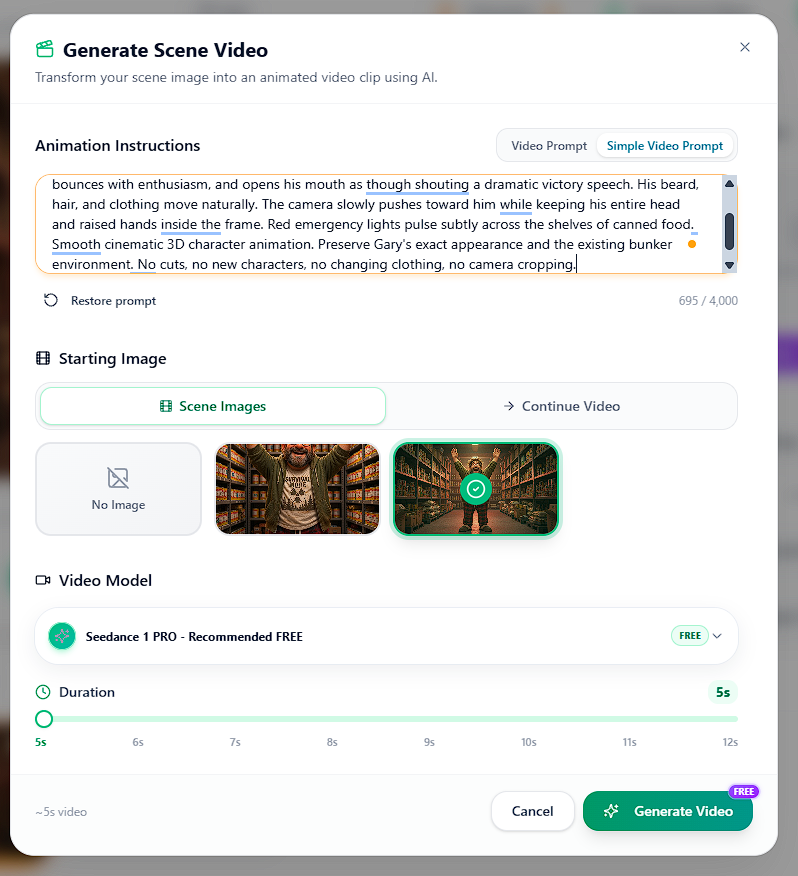
But speaking was another matter. We generated an audio performance and tried synchronizing it to the moving character. His mouth moved, but the movements didn't convincingly follow the words. We repeated the test using different orders: video then voice, image then voice then video, and a fresh animation directed to keep his mouth relaxed before syncing. The mismatch remained obvious to us. I don't need every syllable to win an animation award, but the person saying the line should at least look like the person saying the line.
That limitation mattered because ToonBee's own PRO page advertises a feature called "Make Your Characters Talk", describing AI lip-sync that animates speech from a script or voiceover. We had an active complimentary PRO license. I can't conclude that the feature is broken for every user or every model, only that the methods available to us didn't deliver convincing synchronized acting.
Test two: let the AI direct the movie.
Maybe I was micromanaging the manual editor. That seemed possible. After all, when software calls itself AI-assisted, perhaps it wants to handle more of the work instead of being told where to put the camera every second. So we tried BeeGuide, used From Script, and handed it a proper screenplay. We had scene headings, dialogue, gestures, sound cues, character descriptions, transitions, and a clear ending. Not a vague "make something funny with zombies" instruction.
BeeGuide accepted the screenplay and assembled an approximately 84-second video. The result had recognizable characters and coherent stylized animation. It just wasn't the commercial we wrote. Dialogue came back as narration, scenes and names were reinterpreted, the real website demonstration was missing, and the carefully designed post-logo punchline didn't land the way we had directed it. We had wanted two people having a conversation. We got something closer to a cheerful documentary about a marriage under siege from canned beans.
And then ToonBee explained, in writing, what it was doing.
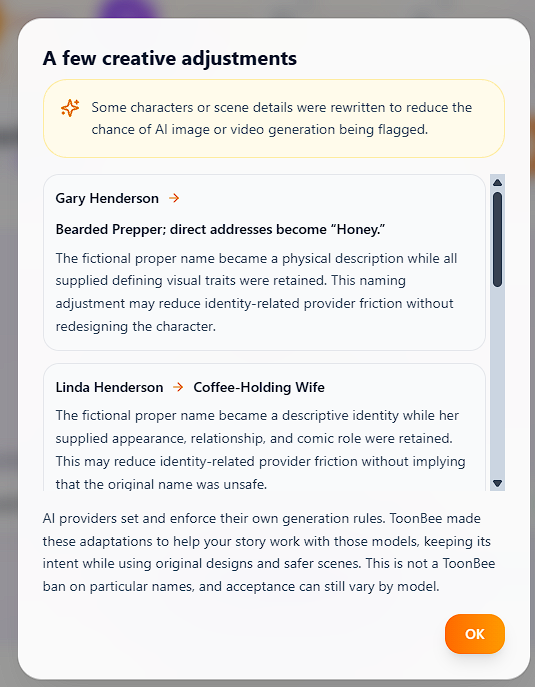
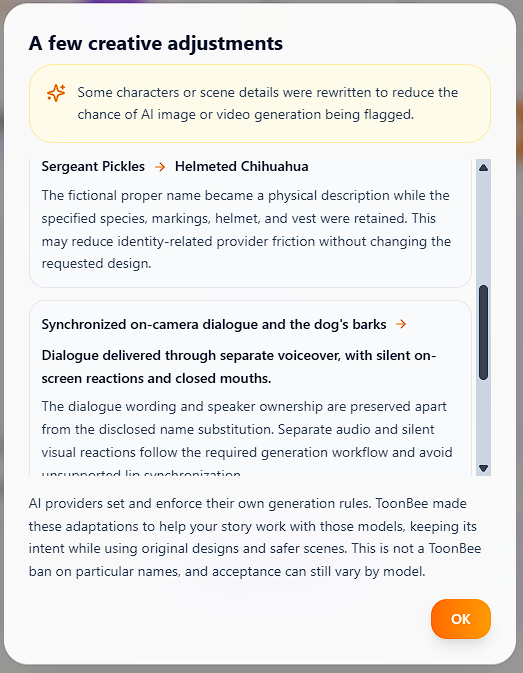
Here is the most revealing part of this experiment. The BeeGuide workflow displayed a notice labeled "A few creative adjustments." It disclosed that names and visual instructions had been rewritten before generation, reportedly to reduce the chance of upstream model rejections. That transparency is useful. I would rather have software tell me it changed the plan than quietly pretend it followed my instructions.
Some substitutions were relatively harmless: Gary became "Bearded Prepper," Linda became "Coffee-Holding Wife," and Sergeant Pickles became "Helmeted Chihuahua." Those are descriptive prompt labels, not proof that the original fictional names were forbidden. But the changes didn't stop with names.
The next notice said that our request for synchronized on-camera dialogue and the dog's barks would be transformed into separate voiceover, silent on-screen reactions, and closed mouths. It even referred to unsupported lip synchronization in the workflow. That's not the AI mispronouncing a word or choosing the wrong camera angle. It's the software telling us that it will replace the core acting requirement with narration.
In the same set of notices, readable website menus, the 404 message, branded storefront details, the official logo, and written slogan were replaced with text-free interfaces and an empty black interstitial. We had been trying to sell a website template, so removing the actual website and logo from the generated presentation was not a small creative flourish.
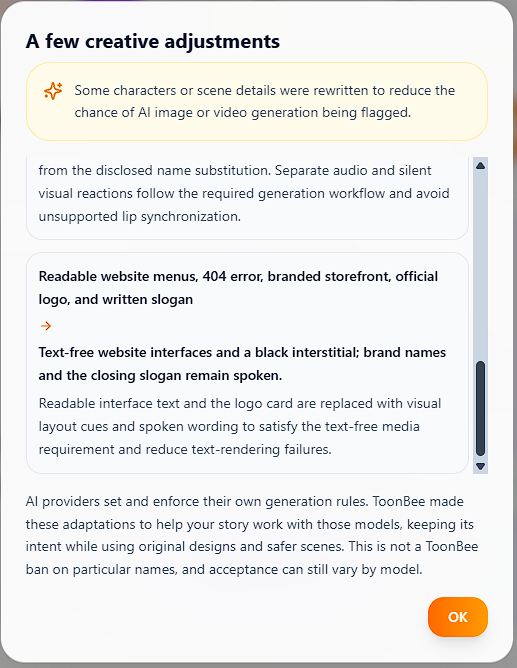
One important production detail: I also tried uploading our actual Template Forge logo and a screenshot of the Bad Influence website during testing. Both attempts produced errors, so neither asset could be used. I do not have the exact error codes or messages saved, and cannot say whether the issue was a temporary failure, a format limitation, or something else. The screenshots in this article document the branding rewrite; this separate upload experience is my firsthand account, not something those screenshots independently prove.
Test three: shorter script, another style, another chance.
I didn't want to quit because the first elaborate script confused the automatic scene splitter. So we rewrote it as a cleaner, 3,965-character screenplay, kept the important character descriptions and dialogue, removed most technical camera notes, and selected a different 3D visual style. I wanted a fair test: if the original production instructions were too demanding, a simplified story should at least let Gary finish his sentence.
BeeGuide responded by recommending approximately 30 scenes to preserve the script without shortening or changing it. We continued with a smaller ten-scene target because we were making a one-minute spot, not a six-part prestige television drama. That's an important caveat: our decision not to follow the full scene recommendation may help explain why some details were abbreviated. It does not explain why the application explicitly rewrote on-camera dialogue into narration again.
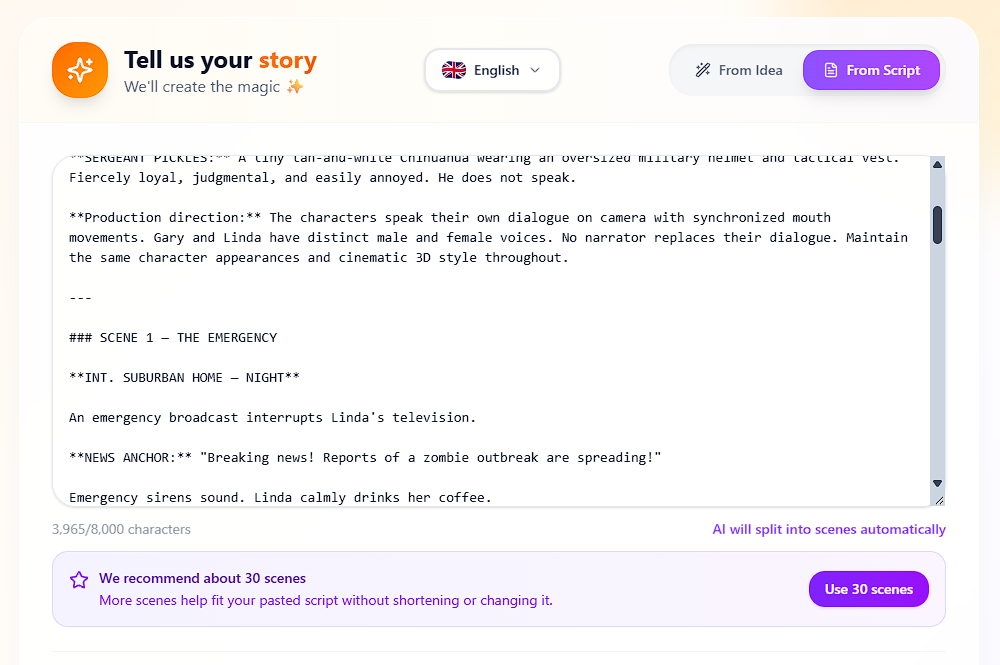
This third round was genuinely a different process. We worked through BeeGuide's images, voice-and-music settings, then video generation. We also tried alternatives when a generation service became temporarily unavailable. And yes, ToonBee created another complete movie. No one can reasonably say we closed the application after one ugly screenshot and rushed off to write a review.
The free options were real. So was the waiting.
One recurring question from the first article was whether the free models actually worked. We now have a better answer: yes. We used them to make images and animation. But in the middle of Test Three, BeeGuide announced that the free image quota had finished, that four images remained, and that we could wait about three hours for the allowance to refresh or select another model.
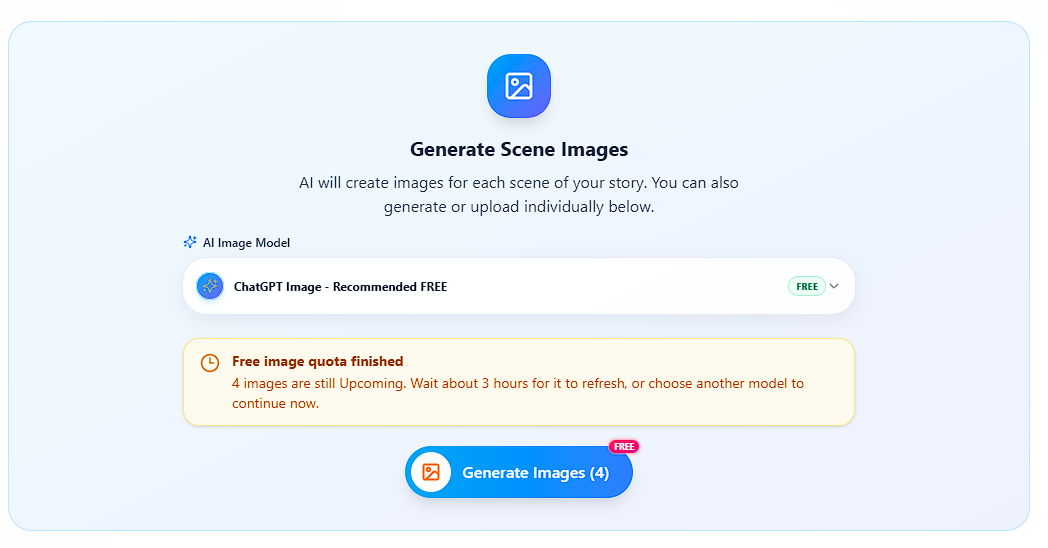
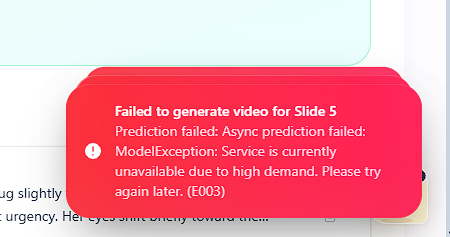
We switched to a PRO-badged alternative image model to finish the images. Later, a video-generation attempt on Slide Five produced an E003 message saying the model service was unavailable because of high demand. We tried another video model, Seedance 2.0, and were able to continue. That's one recorded availability problem, not proof of constant outages. Still, anyone trying to finish client work on a schedule should know that free access and predictable turnaround are separate things.
Two speaking actors. One narrator selector.
Here's another awkward point for a commercial with a husband and wife. In the BeeGuide Voice & Music screen we used, there was one narrator selection, one overall speaking-style setup, and one background-music configuration. We tried to find a way to assign Gary a dramatic booming male performance and Linda a dry female performance on a scene-by-scene basis. We couldn't find one there.
We even added custom instructions asking for distinct male and female character performances. That should have been enough to tell the AI what we intended. But the automated workflow had already told us it planned to keep the characters' mouths closed and put the spoken material in separate narration. A speaking-style prompt doesn't override a production engine that has decided it is making a narrated video.
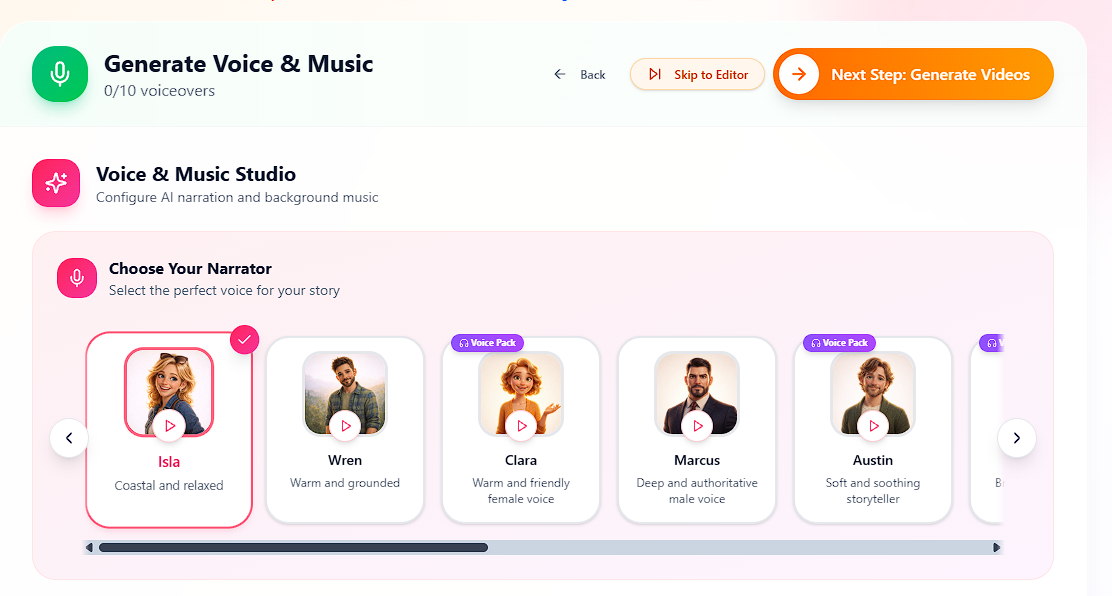
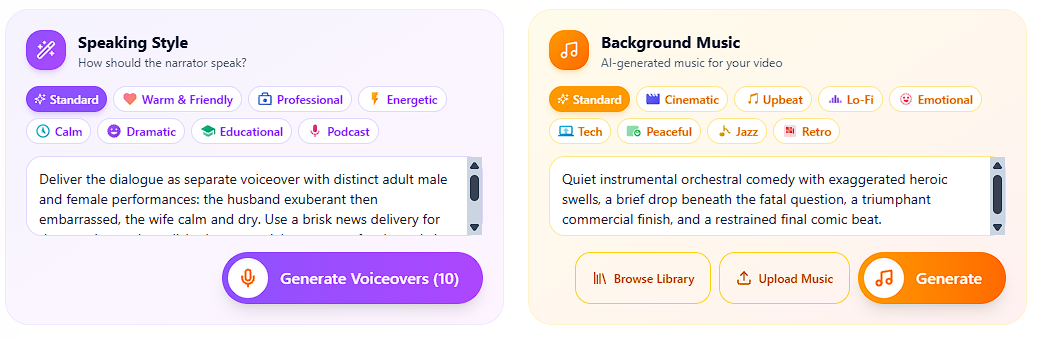
Is that automatically disqualifying for every kind of content? Of course not. A tutorial, product explainer, classroom video, or simple narrated short may be perfectly fine with one narrator. But for a scene where one actor cuts off the other's grand speech, the score dies mid-sentence, and the ending depends on a quiet deadpan delivery, those aren't minor artistic preferences. Those are the comedy.
The final export looked good right up until it stopped looking like our cast.
Test Three eventually exported a finished 64.5-second, 1920-by-1080 video. That's very close to the runtime we wanted, and it had coherent animated environments. There was an emergency at home, Gary in the bunker, a tablet reveal, and a return to the bunker. Those are real successes. It is unfair to pretend ToonBee just spat out random noise.
But the supposed full-screen Bad Influence reveal was generic category artwork, the Template Forge logo-and-slogan moment became an abstract glow on black, and Linda's appearance visibly changed during the closing sequences. Early Linda had glasses, her familiar purple cardigan, bob haircut, and jeans. Late Linda appeared in different clothes, and her face, hairstyle, and glasses changed again. Even a comedy about the apocalypse needs its lead actress to remain the same human being between cuts.
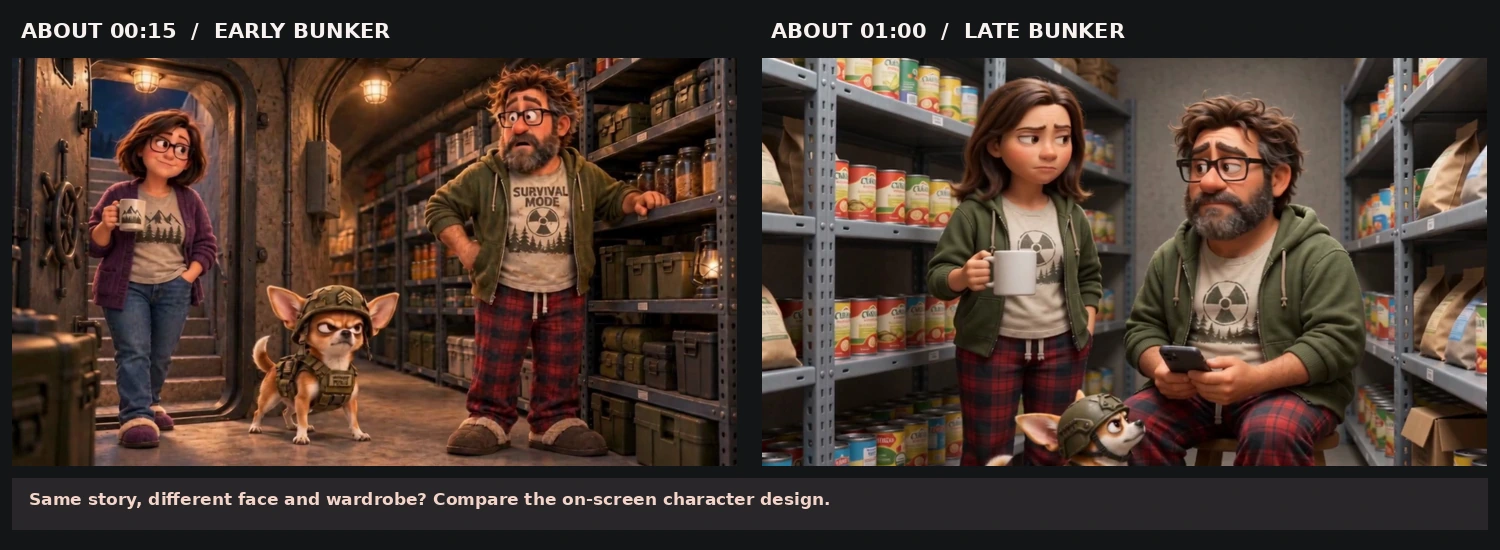
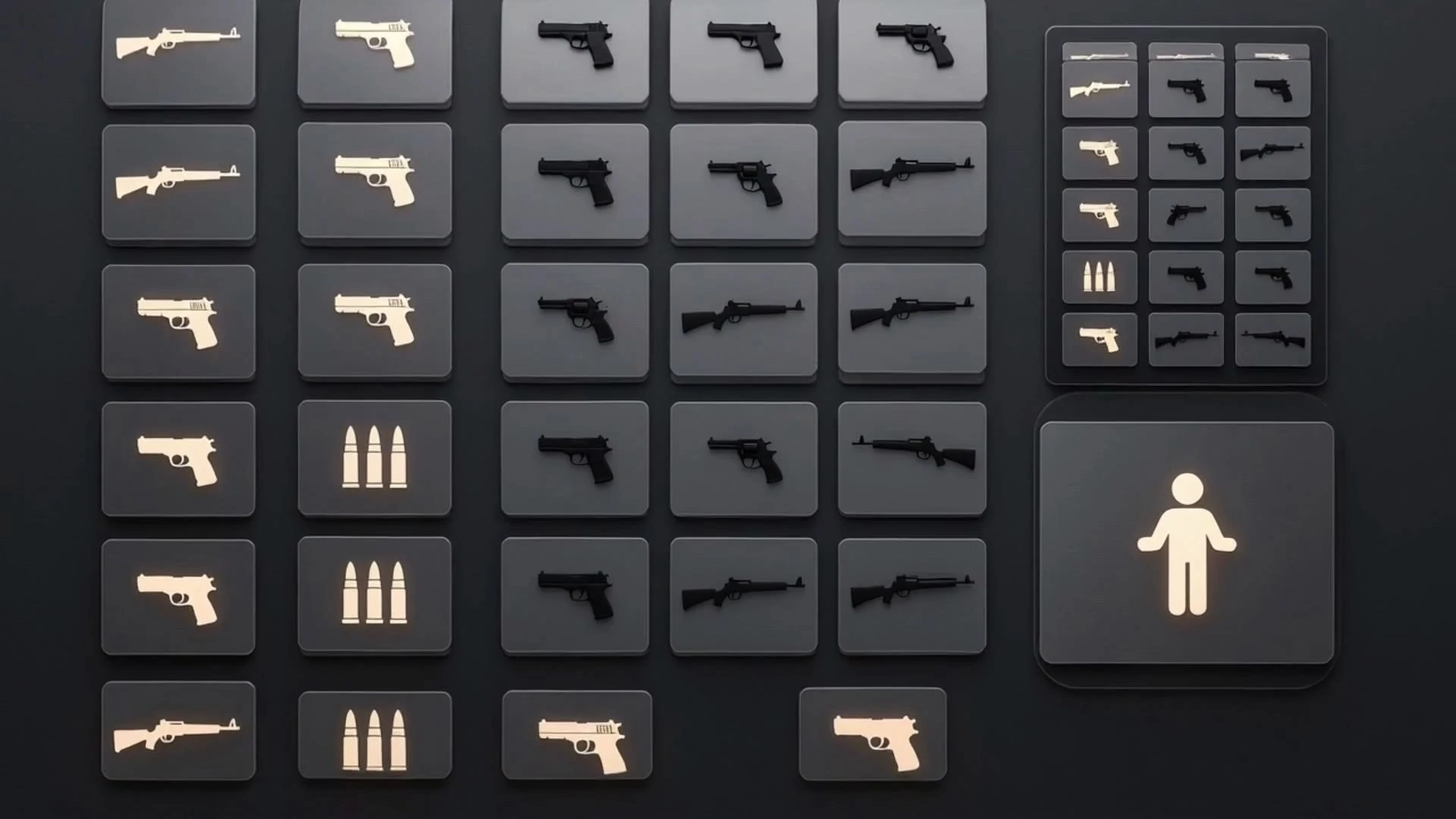
There is a distinction worth making here. The real branding assets were absent from this automated export, but not because we simply decided not to try. I attempted to upload our official Template Forge logo and a screenshot of the Bad Influence website during ToonBee production testing, and the upload attempts returned errors. I could not use either asset. I did not retain the exact error messages, so I cannot establish whether the cause was format compatibility, file size, a temporary service issue, or something else. I also did not supply a real screen recording of the website to this generation. In ordinary postproduction, an editor could still insert those assets manually. I'm not claiming ToonBee corrupted artwork it never received; I am reporting that I tried to provide the logo and website screenshot and could not get them working in this test. The more serious problem remained the dialogue rewrite and the speaking performance we could not achieve, including in separate manual lip-sync attempts.
Don't take my word for it. Watch what ToonBee produced.
These are the original 16:9 MP4 exports from our tests, presented without re-encoding or editorial cuts. The first two are complete BeeGuide movies; the remaining six are shorter BeeStudio motion tests. Press play to inspect the real movement, audio, lip-sync, and continuity. Videos do not autoplay.
Watch the six shorter production tests 5–30 seconds each
The separate tests aren't presented as six distinct failures: some demonstrate genuine improvement in Gary's movement. They are retained here so readers can evaluate the differences directly.
Evidence note: The MP4s are full original exports supplied for this investigation, not downsampled highlights. Video sizes can be substantial, so each player loads on demand. The branded website/logo assets were attempted separately, but those import attempts returned errors; their precise causes were not established.
And then I looked at other customers' experiences.
By this point I wanted an outside sanity check. Was I asking too much? Were we somehow the only people trying to get an animated character to say its lines? I read public customer feedback, including reviews from people who gave ToonBee four stars. That detail matters, because it means the useful observations weren't limited to angry one-star posts.
For example, Jeff Pellet wrote in an October 2026 Trustpilot review that his initial marketing-video experience was successful, but the animated character did not actually speak while a narrator provided the audio. Importantly, his review concerns his initial version of the product, not proof that his account had the same complimentary PRO configuration we tested. Another customer, posting as foto-guy in September, described characters changing between scenes and having limited attempts available to correct them. And a reviewer named Hannes discussed using another video editor to control narration and improve audio synchronization.
There are positive accounts, too. Customers such as Chris L Holdsworth praised ToonBee support for quick responses and upgrade assistance, while others reported enjoying the simplicity of AI-created shorts. Rich Casteel described the program as entertaining and useful, even as he criticized how additional costs shape the purchase decision. These are self-reported customer reviews, not independently inspected projects, and they don't constitute a representative survey. They do show that my experience with narration and continuity isn't an isolated topic in customer discussion.
At the time I checked, the Trustpilot profile displayed 331 reviews and a 3.8/5 score. Scores move; I would rather link you to the source than freeze a changing number in stone. My verdict isn't based on somebody else's stars anyway. It's based on the videos sitting on my hard drive.
Good support doesn't automatically make the tool a fit.
Throughout this process, ToonBee support was responsive. Mellissa clarified that the license wasn't a recurring subscription, made the complimentary PRO upgrade available, and confirmed that my original refund request could remain open while I tested. That was genuinely helpful. I also appreciate that BeeGuide disclosed its screenplay adjustments rather than completely hiding them.
After all the production attempts, though, I concluded the software wasn't suitable for the particular multi-character animated commercial I was trying to produce. I'm pursuing the $77.05 refund under the original request and guarantee, rather than another upgrade or more rounds of troubleshooting. The published refund policy includes a 60-day window and a credit-usage condition, and support had specifically confirmed my testing wouldn't withdraw the open request.
Refund outcome at publication: requested; processing confirmation still pending. If that changes, this section should be updated with the actual result rather than an assumption. I am not claiming ToonBee refused to honor the guarantee.
Here's where I landed after all three approaches.
I can see how ToonBee might appeal to people producing narrated explainers, teaching videos, quick social clips, and AI-assisted visual stories. The free-model options were real. We successfully generated images, character movement, and full exports. Some of the bunker shots looked good enough that I wanted to keep working with them. And support made a sincere effort to retain a customer.
What we could not reliably do was direct two speaking characters through the comedy we had written. We changed generation order. We simplified prompts. We tried BeeStudio and BeeGuide. We changed animation style and models, even let the software take over the production process, and preserved the failed and successful results. We were trying to make a movie with acting, dialogue, and timing. Too often the automated output was a narrated tour of our movie's basic plot.
That distinction is the only purchasing advice I'd give anyone: before buying an AI video tool, decide whether you need a narrated video or an actual scene with characters speaking to each other. Don't assume a generated talking-looking face means reliable speech synchronization. Test that exact requirement, on the version and plan you intend to buy.
Meanwhile, Gary still has three thousand cans of beans, Linda still has the only functioning brain in the bunker, and Sergeant Pickles has requested that all future production contracts include a clause allowing him to bite the narrator.
Sources, scope, and evidence
Firsthand testing: October 13–14, 2026. Primary visual evidence above comes from our actual account screenshots and exported production frames. Findings apply to these workflows and tests. All public reviews are attributed personal reports rather than independent technical measurements. The refund outcome remains pending at the time of this draft.
- Template Forge Part 1 — purchase, license, and credit investigation before production testing.
- ToonBee PRO features — advertised "Make Your Characters Talk" and lip-sync claim.
- ToonBee refund policy — 60-day guarantee, usage condition, and processing information.
- Trustpilot ToonBee reviews — customer reports including Jeff Pellet, Rich Casteel, and Chris L Holdsworth, as accessible when researched.
- Trustpilot continued reviews — reports of scene continuity and post-production audio adjustments.
- Bad Influence demonstration — the real template we attempted to showcase.
We take our work seriously.
Ourselves? Not so much.